lifestyle
Is Roller Skating Good Exercise? What Science Says
Is roller skating good exercise? Yes. Get the breakdown of roller skating benefits, muscles worked, calories burned, and a 30 minute beginner workout.
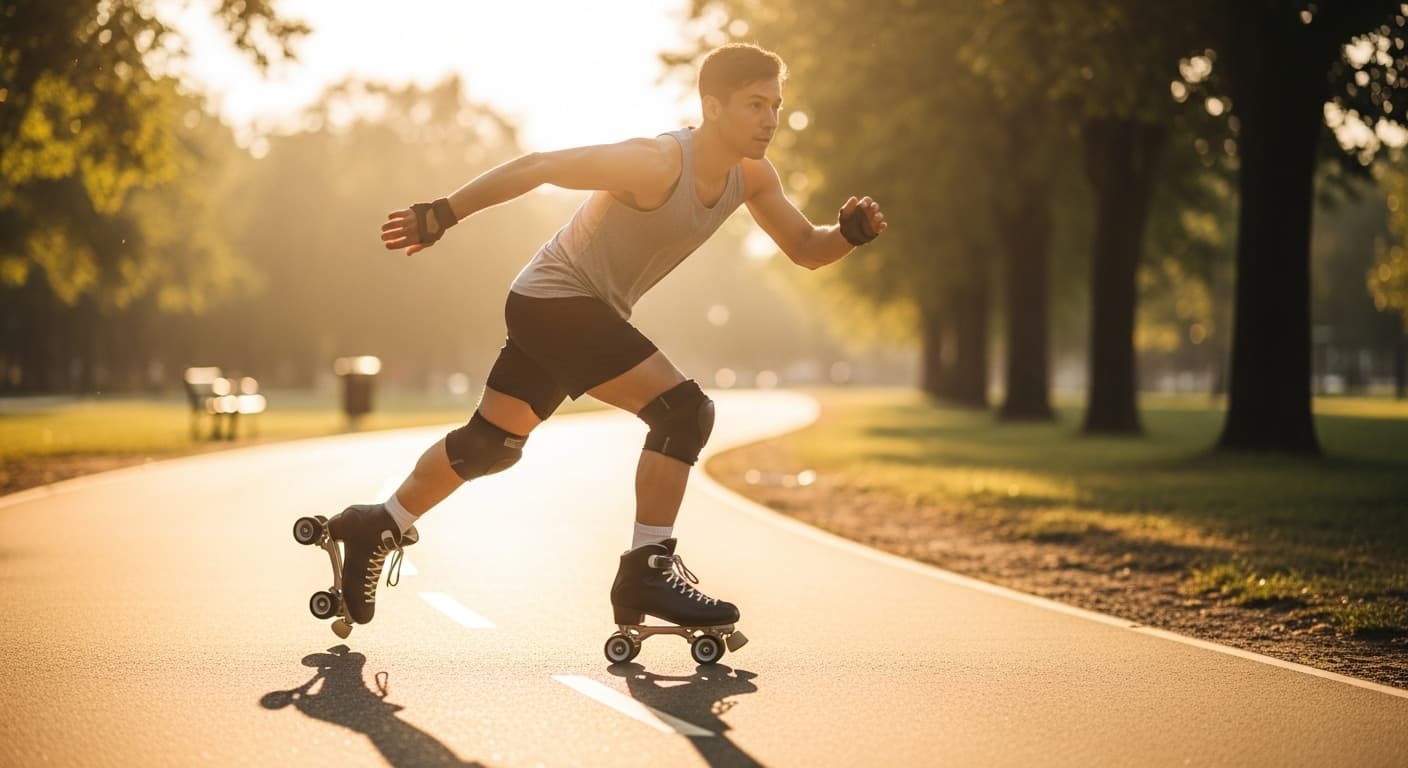
Yes, roller skating is excellent exercise. The U.S. Department of Health and Human Services Physical Activity Guidelines list skating as an accepted moderate to vigorous aerobic activity. A 155-pound adult burns roughly 400 to 600 calories per hour, with low joint impact and full-body engagement across legs, core, and balance.
Most people pick up skates for fun, then notice their legs feel stronger a few weeks in. That is not a coincidence. Roller skating trains cardio, strength, and balance at the same time, which is why it keeps showing up in public health guidance as a real aerobic activity. If you have been asking is roller skating good exercise, the short answer is yes, and the longer answer is even more interesting.
This guide goes deeper than the usual fitness listicles. You will see which muscles do the work, how calorie burn actually scales, how skating compares to running and cycling, why your joints might thank you, and how often to skate to see real gains. At the end, you get a simple thirty minute beginner workout plan you can run three times a week without burning out.
Quick answer: is roller skating good exercise
Yes, roller skating is good exercise. It is a low impact full body cardio workout that trains legs, core, and balance at the same time. The U.S. Department of Health and Human Services Physical Activity Guidelines include skating among accepted aerobic activities, with intensity ranging from moderate rink cruising to vigorous uphill outdoor skating.
The fitness ceiling is higher than new skaters expect. Beginners get heart-rate gains just from holding a stance and stroking slowly. Intermediate skaters add crossovers, pace changes, and longer distances that push cardio closer to running territory. Advanced skaters doing sprints or skating hills can hit clearly vigorous effort.
Because skating is low impact, it works well as a lifelong cardio tool. Many former runners with knee or hip issues move to skating and stay active for decades longer than they would have otherwise. As a trainer, I've written skate sessions into fat-loss programs for dozens of clients, and the adherence rates beat treadmill plans almost every time. If you want a broader overview of the sport, our complete roller magic guide covers gear, skills, and the bigger picture beyond fitness.
What kind of workout is roller skating?
Roller skating is a hybrid cardio and strength workout with a big balance component. Your heart rate climbs because your legs push you forward against rolling resistance, wind, and small inclines. Your muscles work because every stride is a controlled single leg push. Your balance system works because you are rolling on wheels, not standing still.
Cardio component
Steady skating at a comfortable pace usually falls inside the moderate aerobic zone for most adults. You can hold a conversation, but only just. Push the pace, add hills, or skate longer and the effort shifts toward vigorous. The HHS Physical Activity Guidelines recommend at least one hundred fifty minutes of moderate aerobic activity per week for adults, and skating counts toward that total.
Strength and balance component
Unlike running, skating constantly challenges side to side stability. Each stride is a one legged stance while the other leg pushes out and back. Your hips, glutes, and small stabilizer muscles fire to keep you tracking straight. Turns, stops, and crossovers add a strength element that a treadmill never touches.
That balance load is what makes skating so valuable for older adults, which we cover more in our guide on roller skating for adults over 40.
Which muscles does roller skating work?
Roller skating works your quads, glutes, hamstrings, calves, hip stabilizers, and core through every stride. The push leg extends the hip and knee while the support leg holds balance. Turns and crossovers add oblique and inner thigh work. Over a few weeks of regular sessions, most skaters notice stronger legs, a more stable torso, and better posture off skates.
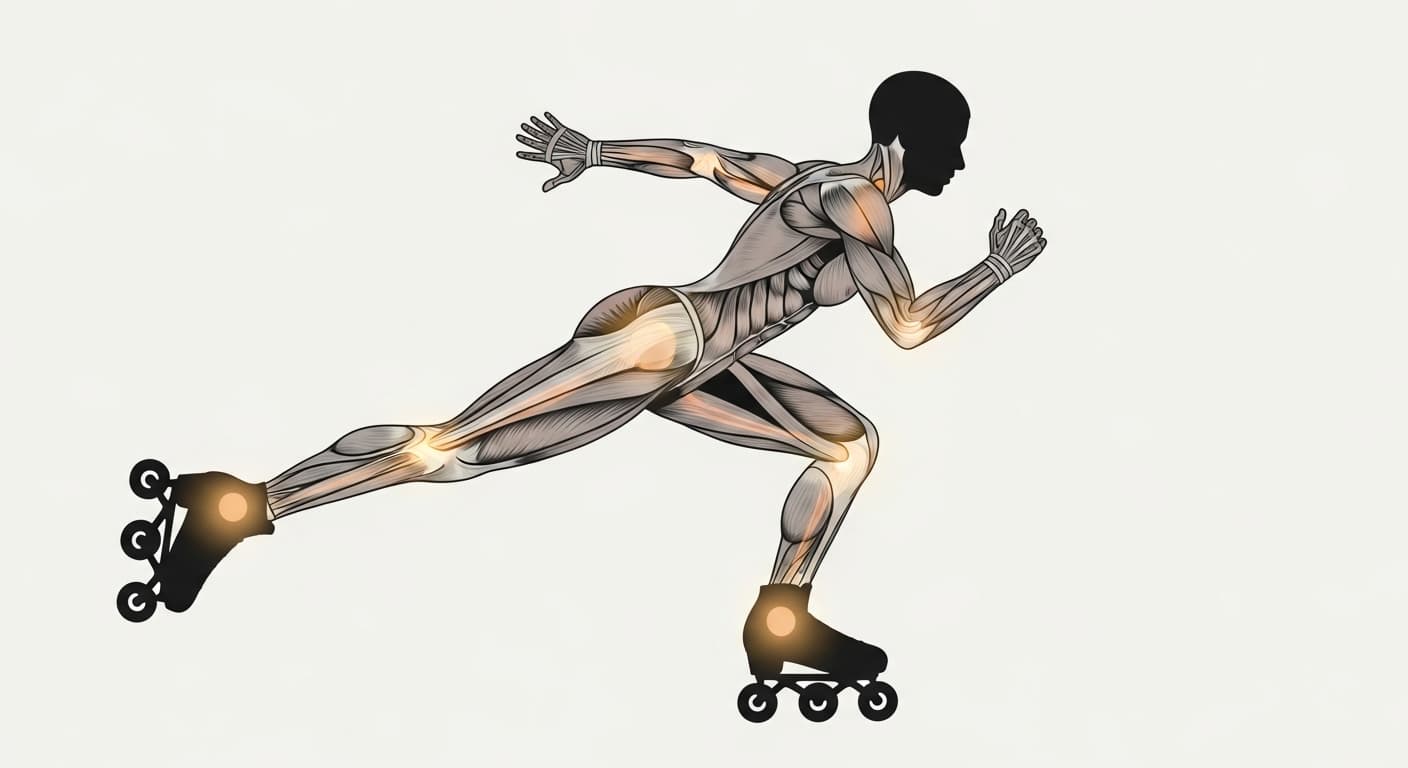
Quads, glutes, and hamstrings
The big leg muscles do most of the visible work. Your quads drive knee extension at the end of each push. Your glutes control hip extension and keep you from collapsing inward. Your hamstrings help recover the leg and stabilize the knee. Together, these three groups build the classic skater leg shape.
Calves, hip stabilizers, and core
The smaller supporting muscles matter more than most people realize. Your calves fine tune your ankle angle over the skate. Your hip stabilizers, including the glute medius, keep your pelvis level on each single leg stance. Your core works nonstop to keep your torso upright, especially on turns and uneven pavement.
Why skating builds balanced strength
Running trains mostly a forward plane of motion. Skating trains forward and side to side. That side load is why skaters often have strong hips and resilient knees. It is also why skating transfers well to other sports, from skiing to hockey to tennis.
How many calories does roller skating burn?
Calories burned while roller skating vary widely. Body weight, skating pace, surface, wind, and technique all change the number. The HHS Physical Activity Guidelines classify skating across a range of intensities, from moderate to vigorous, which is why any single calorie figure online is usually a rough estimate rather than a hard fact.
What actually changes the number
Heavier skaters burn more calories at any given pace because moving a bigger mass takes more energy. Faster skating, hills, headwind, and crossovers all raise the effort. Easy rink laps at a social pace sit on the lower end of moderate activity. Steady outdoor skating over longer distances sits squarely in moderate territory. Interval sessions with sprints or hills can push into the vigorous zone.
How to estimate yours without fake precision
Rather than chasing a specific calorie number, use intensity as your guide. If you can sing, you are probably below moderate. If you can talk in short sentences, you are in moderate range. If you can only manage a few words at a time, you are vigorous. That talk test is the same one used in public health guidance and it actually works on skates.
Why the calorie focus misses the point
Skaters who chase a calorie number burn out faster than skaters who chase skill. Aim for consistency and progression. The calories will follow. For a gear and pacing read, see our guide on what to wear roller skating so comfort does not become the bottleneck.
Roller skating vs running: which is better cardio
Neither roller skating nor running wins outright. Running tends to burn more calories per minute and builds running specific fitness fast. Roller skating is lower impact, works more muscle groups at once, and trains balance on top of cardio. For joints, skating is the friendlier choice. For pure calorie speed in a short session, running usually edges ahead.
Impact on joints
Running sends repeated impact through your ankles, knees, and hips on every foot strike. Roller skating keeps your feet on wheels, which smooths out that impact. Many skaters with past knee or hip issues choose skating specifically because it gives them real cardio without the pounding. This is the biggest single difference between the two.
Muscle recruitment
Running is a sagittal plane movement. You move mostly forward. Roller skating forces you to push side to side, which recruits inner thighs, outer hips, and stabilizers that running barely touches. After a month of skating, former runners often notice stronger glute medius and more stable knees.
Time and accessibility
Running wins on access. You can run almost anywhere with one pair of shoes. Skating needs a smoother surface and slightly more gear. If you live near a good path or rink, the time cost evens out. If not, factor the travel into your plan.
Roller skating vs cycling for fitness
Roller skating and cycling sit in the same low impact cardio family, but they train different things. Cycling isolates your legs and protects your joints but does little for balance. Skating shares the joint protection while adding constant balance and core demand. Cyclists who switch to skating often report stronger stabilizers and better posture within weeks.
Cardio output
Cycling usually produces a higher sustained heart rate at the same perceived effort, because you can pedal smoothly for long stretches. Skating is more stop and start, with pushes and glides. Over a full session, a good skater and a good cyclist can reach similar cardiovascular loads with different feel.
Muscle and balance
Cyclists sit, skaters stand. That single difference matters. Standing recruits your core and balance system all session long. Skating also loads your glutes and hamstrings through a wider range of motion than most cyclists ever see. If you cycle a lot and want a crosstraining option that fills real gaps, skating is a strong match.
Practical picks
Cycling wins for very long distance low impact cardio. Skating wins for functional strength, balance, and variety. Many skaters keep a bike too and rotate based on weather, terrain, and mood. They pair well rather than compete.
Is roller skating good for joint health and low impact cardio?
Roller skating is a low impact cardio activity, which means your feet stay on wheels instead of striking the ground. That removes the sharp repeated loads that often bother knees, ankles, and hips in runners. For people with joint issues or a history of impact injuries, skating can be a sustainable way to keep aerobic fitness without giving up on the activity they can do.
Why low impact matters
High impact cardio like running creates repeated ground reaction forces on every step. Over time, that load can aggravate existing cartilage, tendon, or joint issues. Skating replaces impact with a smoother rolling load. Your muscles still work hard. Your joints just get a break from the pounding.
Form still matters
Low impact does not mean zero risk. Falls happen, and bad form can strain hips or knees even on skates. Bent knees, a centered stance, and smooth strides protect your joints. Wearing wrist guards and a helmet every session reduces the common new skater injuries. Our writeup on what to wear roller skating covers gear choices in more detail.
When to check with a professional
If you have a diagnosed joint condition or recent surgery, talk to your physical therapist or doctor before a new cardio routine. Skating is gentler on joints than running, but every body is different. A short clearance conversation is worth the peace of mind.
Does roller skating have mental health benefits?
Roller skating supports mental health through steady aerobic activity, social connection at rinks, and the flow state that comes with music and rhythm. Aerobic exercise is one of the most consistent lifestyle tools in mental health research, and the HHS Physical Activity Guidelines specifically link regular activity to lower risk of depression and anxiety symptoms for adults.
The flow state effect
Skating demands just enough attention to quiet anxious thinking. You cannot plan your week while learning crossovers. Music, movement, and balance combine into something close to a meditation. New skaters often mention this within the first few sessions without realizing what it is.
Community and connection
Rinks are social spaces. Group classes, adult skate nights, and casual meetups create a sense of community that solo gym workouts rarely match. For many adult skaters, the community is what turns a fun hobby into a long term habit.
Confidence compounding
Learning to skate is a series of small wins. First stride, first stop, first turn, first lap without a wobble. Each win builds a sense of capability that tends to spill into other areas of life. That compounding confidence is hard to measure but easy to feel.
How often should you roller skate for fitness
Most adults see real fitness gains from roller skating three times per week in sessions of thirty to sixty minutes. That matches the general moderate aerobic activity target in the HHS Physical Activity Guidelines, which call for at least one hundred fifty minutes per week. Short frequent sessions beat one long weekend session for both cardio progress and skill development.
Weekly structure
Three to four sessions per week is a strong sweet spot. It gives your nervous system enough repetition to lock in skills, and your muscles enough recovery time to adapt. One rest day between sessions is plenty for beginners. Skaters with more training background can go back to back.
Session length
Thirty minutes is enough to get a real cardio stimulus once you can skate steadily. Forty five to sixty minutes is ideal once you have the endurance for it. Much longer than that and most new skaters get tired legs and sloppy form, which raises injury risk.
Progression over months
Week one might be three sessions of twenty minutes. Month two, three sessions of forty minutes. Month four, mixed sessions with some intervals and some long easy cruising. Progression beats intensity for long term gains.
What does a beginner 30-minute skate workout look like?
This simple thirty minute plan, done three times per week, hits the general aerobic target in the HHS Physical Activity Guidelines and builds skate specific skills at the same time. It works for any new skater with basic balance and a safe flat surface. Adjust pace rather than time if a session feels too easy or too hard.
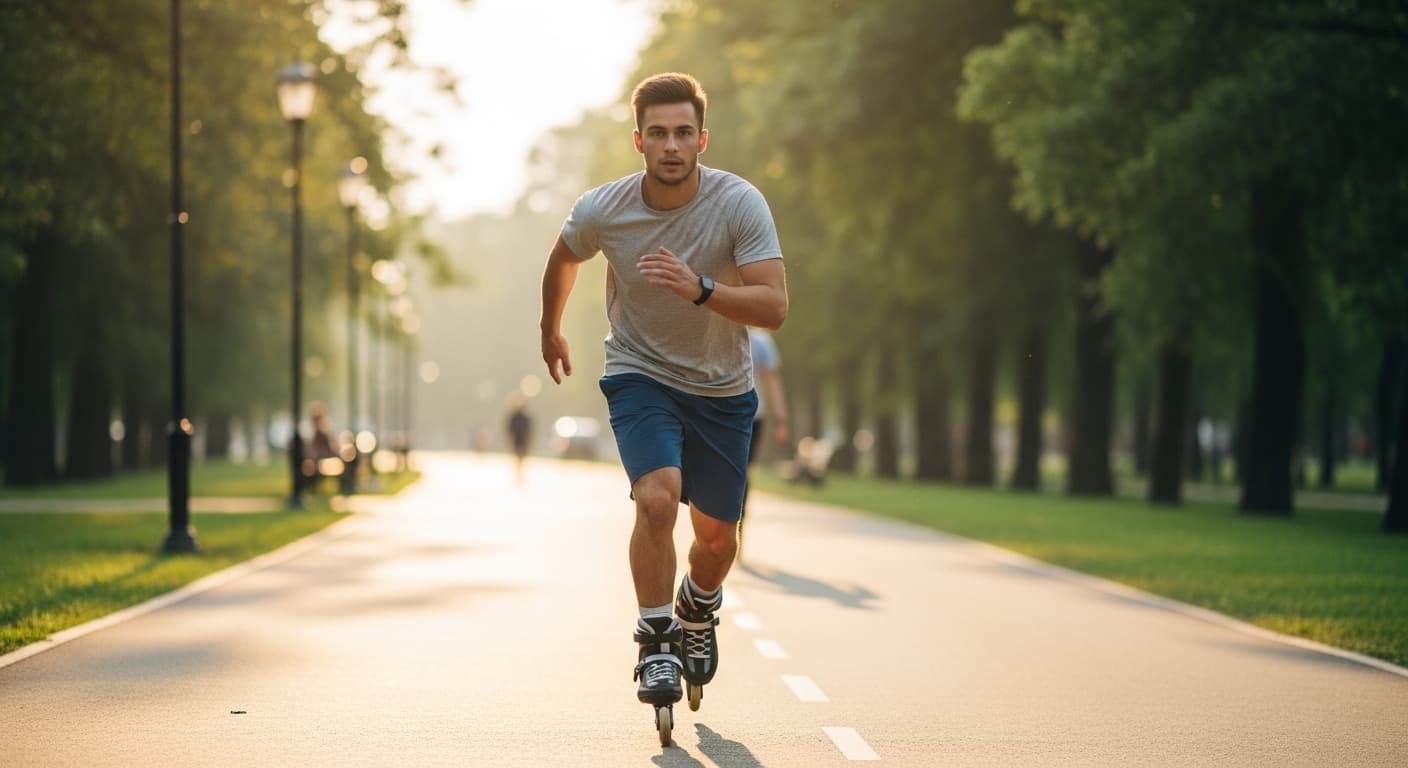
Warm up, 5 minutes
Start slow. Roll at a relaxed pace, take easy gliding strides, and let your ankles and knees wake up. Do a few side to side weight shifts and a couple of shallow turns. The goal is not speed. The goal is moving blood into your working muscles and tuning your balance before the main set.
Main set, 20 minutes
Skate at a steady moderate pace for ten minutes without stopping. Your breathing should be noticeably quicker but you should still be able to talk in short sentences. Take a one minute easy cruise. Repeat another ten minute steady block. This simple structure pushes your aerobic system while building real skating endurance.
For stronger skaters, replace the second ten minute block with six rounds of one minute faster skating and one minute easy recovery. Keep the form clean. Speed without form teaches bad habits.
Cooldown, 5 minutes
Roll easy for five minutes. Let your heart rate drift down. Do a few slow turns in each direction. Stretch calves, quads, and hips once your skates are off. Skipping the cooldown does not ruin a session, but skaters who cool down and stretch tend to feel better the next day.
Weekly plan example
Monday: full thirty minute plan at steady moderate pace. Wednesday: full plan with interval variant in the main set. Saturday: full plan on a new path or rink to keep things fresh. For more skill focused drills you can mix in, see our roller skating tips for beginners. If you are skating with kids, our guide on how to teach a kid to roller skate covers age appropriate session lengths.
Frequently Asked Questions
Is roller skating good exercise for weight loss?
Roller skating can support weight loss when paired with a steady routine and sensible eating. It is a full body low impact cardio activity that works large leg and core muscles, and the calories burned scale with your intensity, body weight, and session length. Most skaters who skate three times a week see steady fitness gains over a few months.
How many calories do you burn roller skating?
Calorie burn varies widely by body weight, pace, and terrain. Easy rink cruising sits on the lighter end of moderate activity. Steady outdoor skating with hills, wind, or faster pace pushes into vigorous aerobic territory. The U.S. Department of Health and Human Services lists skating among accepted moderate to vigorous aerobic activities in its Physical Activity Guidelines.
Is roller skating better cardio than running?
Neither is universally better. Running burns a lot of calories per minute but is high impact on knees and hips. Roller skating is low impact, uses more muscle groups, and trains balance at the same time. For joints, roller skating is easier. For pure calorie speed, running usually wins.
What muscles does roller skating work?
Roller skating works your quads, glutes, hamstrings, calves, hip stabilizers, and core. Every stride loads the outside leg while the inside leg holds balance. Turns, stops, and crossovers add extra work for your hips and core. Over time, skaters notice stronger legs and a steadier torso on and off skates.
How often should I roller skate to get fit?
Three sessions of thirty to sixty minutes per week is a strong starting point for most adults. That lines up with the general aerobic activity target in the HHS Physical Activity Guidelines. Short regular sessions beat one long weekend session for both fitness gains and skill progress.
Is roller skating safe for bad knees?
Roller skating is often friendlier on knees than running because it removes the repeated pounding of foot strike. Good form, bent knees, and a smooth surface matter. If you have a diagnosed knee condition, check with your doctor or physical therapist before starting a new cardio routine.
Ready to skate your way fit
Roller skating is good exercise by any honest measure. You get real cardio, meaningful strength, and balance work that most gym routines skip entirely. You also get something machines cannot replicate: music, movement, and a community of skaters who actually look forward to their workouts.
Your next step is simple. Pick three thirty minute windows this week. Use the plan above. Keep the pace honest, not heroic. If you are not sure which skates fit your goals, take our short skate recommendation quiz and get matched to a starting skate style in about two minutes. Then lace up and let the fitness take care of itself. For the full public health context, the HHS Physical Activity Guidelines and the CDC adult physical activity recommendations classify skating as a moderate to vigorous aerobic activity that counts toward the 150 minute weekly target.
Frequently asked questions
Related reads
Your full roller magic guide to roller skating: beginner basics, skate buying tips, indoor vs outdoor, fitness benefits, parties, safety gear, and more.
17 min read
Indoor vs outdoor roller skating compared: surfaces, 78A to 97A wheels, safety, gear, and which one suits beginners and fitness skaters best.
18 min read
Learn how to roller skate for beginners with a step by step guide: gear, stance, first strides, stopping, falling safely, and a 4 week practice plan.
19 min read
Roller skating tips for beginners that actually work. 20 practical tips on gear, stance, movement, and the mistakes to avoid on your first sessions.
14 min read
How to balance on roller skates: the exact stance, weight-shift drill, single-leg hold, and 3 proven home exercises beginners can use to stop wobbling.
11 min read