lifestyle
Indoor vs Outdoor Roller Skating: Full Comparison
Indoor vs outdoor roller skating compared: surfaces, 78A to 97A wheels, safety, gear, and which one suits beginners and fitness skaters best.
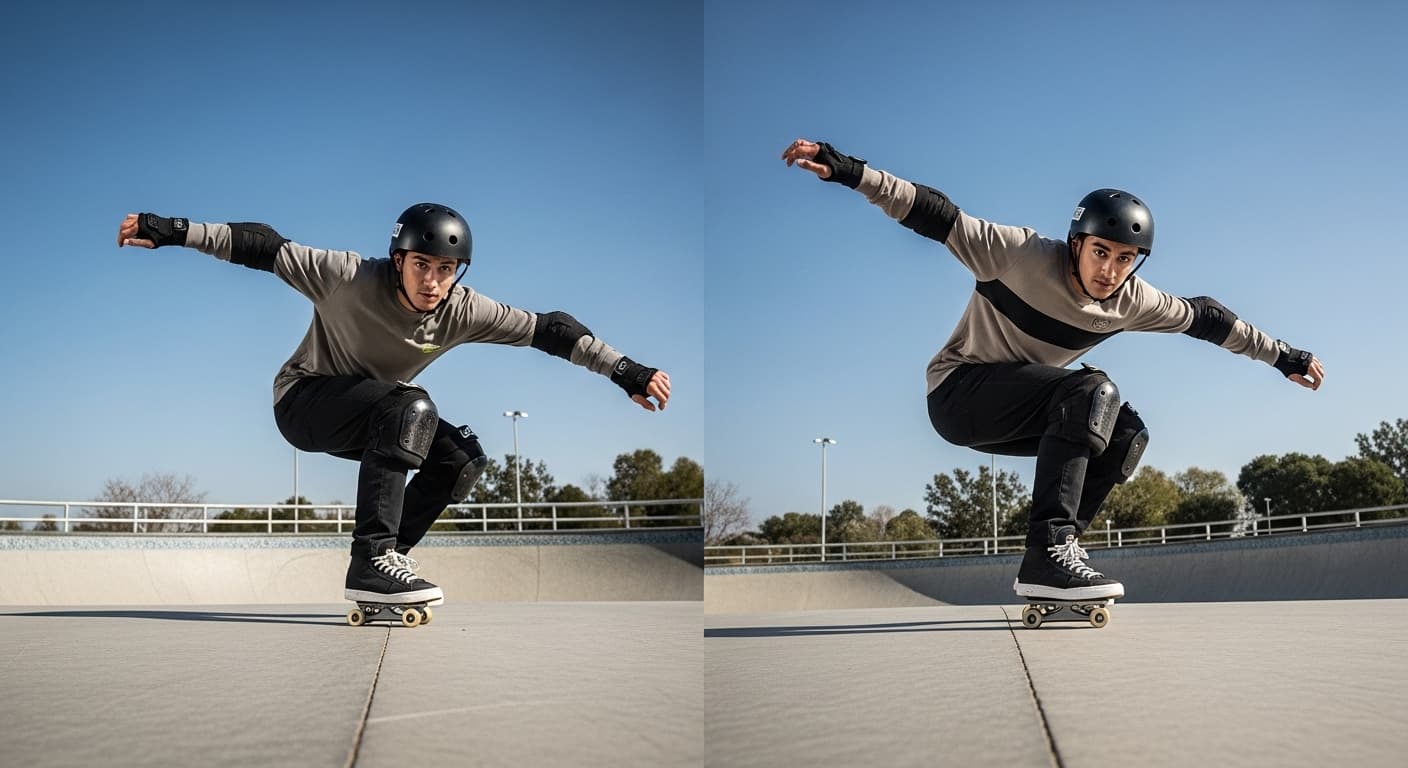
Indoor roller skating uses harder wheels (88A to 97A) on smooth rink floors and suits most beginners. Outdoor roller skating uses softer wheels (78A to 82A) to absorb cracks and pavement. Most skaters keep one boot and swap between the two wheel sets rather than buying two pairs of skates.
Indoor vs outdoor roller skating is the first real choice most new skaters face after buying their first boots. The two feel like different sports even on the same pair of skates. One is smooth, warm, and social. The other is open, windy, and full of terrain surprises. This guide compares them side by side so you know exactly which one fits your goals, your body, and your neighborhood.
This guide pulls from rink owner guidance, skate maker specs, and real skater questions across forums to build this comparison. You get the honest trade-offs, the wheel science that makes each setup work, the safety differences, and a clear path if you want to do both. For the bigger picture of how this fits into learning to skate, start with our complete roller magic guide.
Quick answer: indoor vs outdoor roller skating, which should you pick
Indoor roller skating is the better starting point for most beginners because rink floors are flat, predictable, and weather-proof. Outdoor roller skating gives you freedom, stronger cardio, and tougher terrain that builds balance faster. Neither is better overall. The right pick depends on your skill level, your goals, and whether a rink is close enough to use regularly.
Think of the two as complementary rather than competing. Indoor sessions teach clean technique. Outdoor sessions test it. Most experienced skaters end up doing both, often with a single boot and two wheel sets. If you have a rink within driving distance and a smooth path near home, you already have everything you need to enjoy both sides. I skate both styles every week, and the surface difference shows up in my legs by day two, rink laps stay in my quads while outdoor miles light up my glutes and hip stabilizers.
What are the key differences at a glance
Indoor and outdoor roller skating differ in surface, wheel hardness, speed profile, safety risks, and social setting. Rink floors are smooth wood or coated concrete. Outdoor surfaces include asphalt, sealed concrete, boardwalks, and painted park paths. Wheel hardness flips between the two. Indoor wheels run harder for speed, outdoor wheels run softer for shock absorption.
Here is the fast comparison many skaters want before going deeper.
| Factor | Indoor roller skating | Outdoor roller skating |
|---|---|---|
| Surface | Smooth rink floor, wood or coated | Asphalt, concrete, boardwalks |
| Wheel hardness | 88a and up (harder) | 78a to 82a (softer) |
| Speed feel | Fast, smooth, consistent | Variable, slowed by texture |
| Weather | None, climate controlled | Sun, wind, rain, temperature |
| Cost per session | Rink admission plus rentals | Free after gear purchase |
| Social vibe | Music, group skating, events | Quiet, solo, or with a friend |
| Main risks | Collisions, slips on wet spots | Cracks, pebbles, traffic |
| Best for | Learning, style, rhythm, derby | Fitness, distance, freedom |
The single biggest practical difference is wheel choice. Hard wheels on rough ground bounce and skid. Soft wheels on a rink feel sticky and slow. Matching wheel to surface is not optional if you want a safe, enjoyable session.
What does indoor roller skating offer: surfaces, speed, skills
Indoor roller skating takes place on smooth flat floors built for skating, which makes it the easiest environment to learn technique. Rink surfaces are usually hardwood coated with a skate-friendly finish, or sealed concrete. The predictable floor lets you focus on stance, stride, turns, and stopping without worrying about cracks, weather, or traffic.
Rinks also open up skills that are hard to learn outdoors. Jam skating, rhythm skating, artistic skating, and roller derby all need a consistent surface and space to move. Speed skating laps feel clean on rink floors because your wheels never lose contact with the ground. This is why most skate communities and lessons live at indoor rinks.
The social side of indoor skating
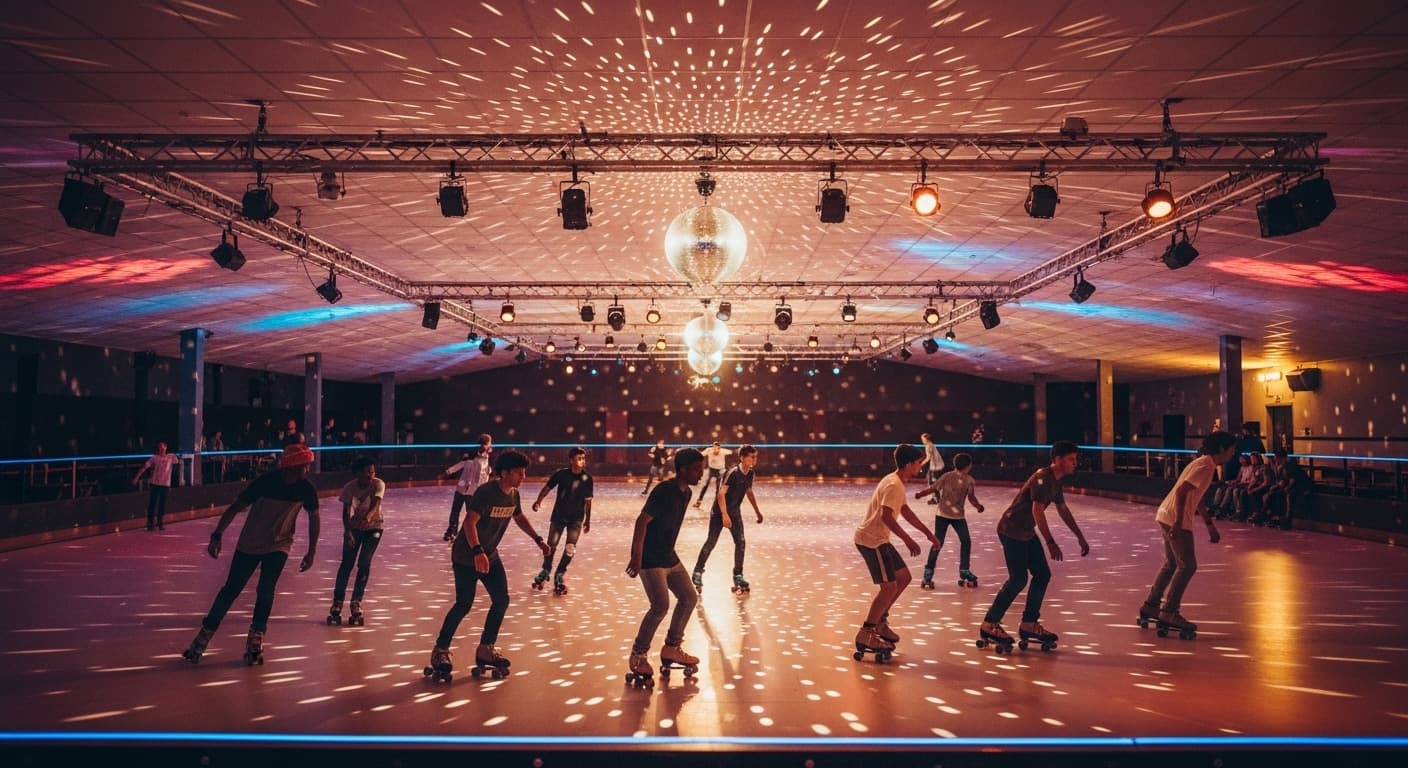
Rinks double as community hubs. Sessions often include music, themed nights, beginner lessons, and group skates. New skaters benefit from being around more experienced skaters who give informal tips. If your goal is to find people who skate, an indoor rink is almost always the fastest way in. To find sessions near you, check our directory in roller skating rinks near me.
The downsides worth knowing
Rinks cost money per session, have set hours, and may be far from home. Some towns have no rink at all. During busy public sessions the floor gets crowded, which can feel tight for nervous beginners. Booking quieter weekday or early morning slots is a simple fix.
What does outdoor roller skating offer: terrain, challenge, freedom
Outdoor roller skating turns the whole world into your rink. Paths, park loops, boardwalks, quiet streets, and sealed parking lots are all fair game. The trade is variety for unpredictability. Pavement changes from block to block, weather shifts by the hour, and small pebbles can stop a wheel cold if you are not watching. Outdoor skating rewards attention.
The upside is huge. Cardio improves because wind and small inclines add resistance. Balance sharpens because the ground keeps asking you to adjust. Sessions are free once you own gear. And the scenery beats any rink, especially on a long park path or a boardwalk near water. Many former runners who quit because of joint pain take up outdoor skating for the same cardio without the pounding.
Common outdoor surfaces and how they skate
Smooth sealed asphalt is the best outdoor surface you can find. Painted park paths are usually excellent too. Older concrete with expansion joints is still skateable but requires weight shifts over each crack. Chipseal, gravel, and loose sand are the enemies. Wet leaves and painted crosswalks get slick fast. If you want drill ideas for bumpy ground, our walkthrough on how to roller skate on rough surfaces covers the techniques that actually work.
Safety awareness outside
Outdoor skating shares space with pedestrians, bikes, cars, and dogs. Always skate with traffic flow where legal, use bike lanes when available, and keep headphones at low volume or one ear out. A helmet is non-negotiable outside, and lights or reflective gear matter any time you skate near dusk.
How does wheel hardness explain the split between indoor and outdoor
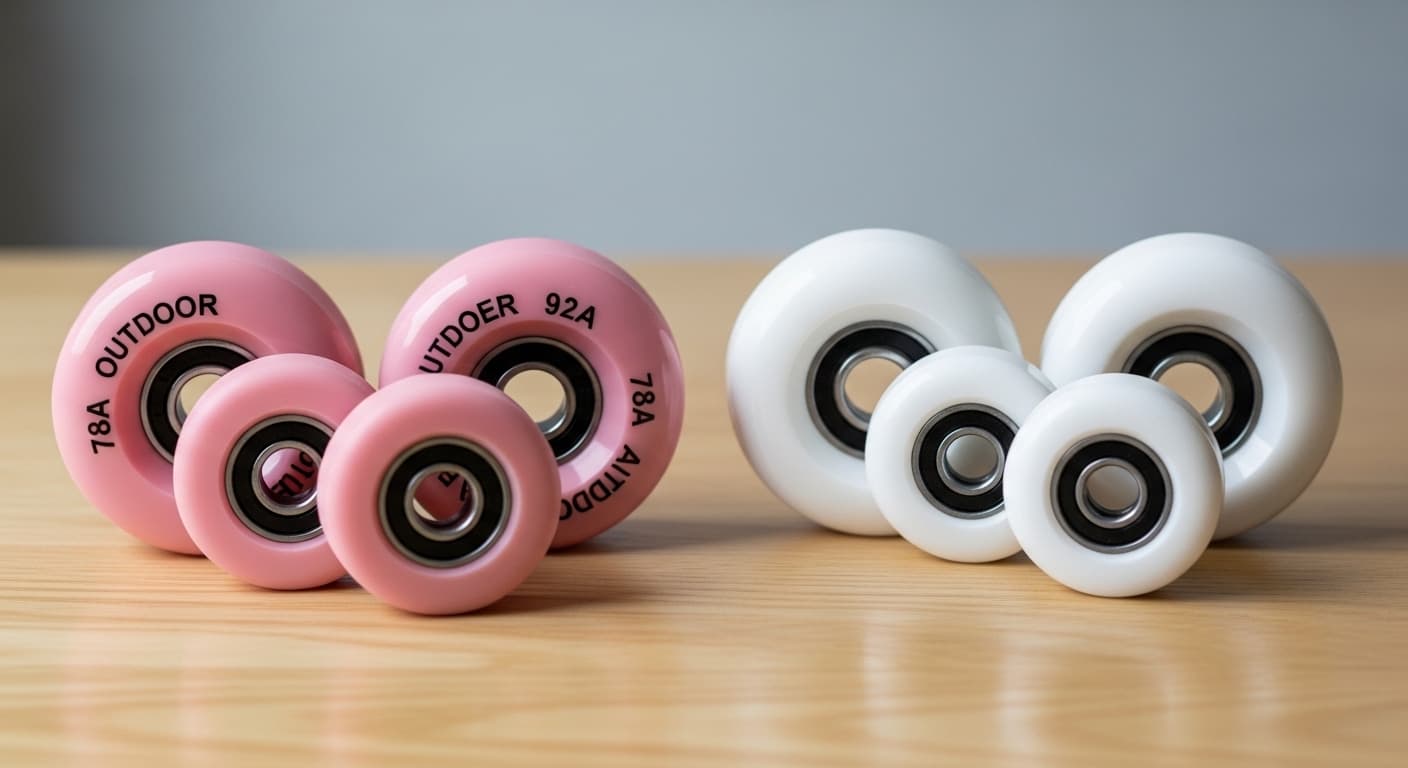
Wheel hardness is the single most important variable in indoor vs outdoor roller skate wheels. Hardness is measured by a durometer number, printed on the wheel as something like 78a, 88a, or 97a. Higher numbers are harder. Harder wheels roll faster on smooth floors. Softer wheels absorb shock on rough ground. The mismatch of wheel to surface is what makes skates feel wrong.
Indoor wheels typically run 88a to 97a. At that hardness, the wheel barely deforms under your weight, so energy goes into forward motion instead of squish. On a smooth rink, that feels fast and glassy. On rough pavement, that same wheel skips over texture and loses grip, which is unsafe.
Typical outdoor wheel range
Outdoor roller skates use wheels in the 78a to 82a range. The softer rubber flexes to hug pebbles, cracks, and rough patches. You feel less of the road through your feet, and the wheel keeps grip instead of bouncing. The trade is slightly slower top speed and faster wear when you ride indoors on soft wheels.
The hybrid wheel option
Some skaters use 84a to 86a hybrid wheels on mixed surfaces like coated outdoor skateparks, gym floors, and sealed outdoor tennis courts. Hybrids are a compromise. They do nothing perfectly, but they cover both worlds well enough for casual skaters who do not want to switch wheels every weekend. For specific wheel recommendations by skate style, see our full guide to the best roller skate wheels.
What about equipment: can the same skates do both indoor and outdoor
Yes, the same roller skates can do both indoor and outdoor with a wheel swap. The boot, plate, trucks, and bearings do not care about surface. Only the wheels and sometimes the bearings change between the two. That is why most skaters buy one boot and keep two sets of wheels, swapping in the set that matches the session.
A wheel swap takes about ten minutes with a basic skate tool. Loosen the axle nut, slide the old wheel off, slide the new wheel on with the bearings still in place, and retighten. If you skate outside a lot, consider separate bearings for each set because grit eats bearings faster outdoors. Shielded or sealed bearings handle outdoor conditions better than open ones.
When two pairs of skates make sense
Two full pairs are worth it if you train both styles seriously or need special setups like jam plugs for rhythm skating, short frames for inline speed, or different plate hardness for derby. Casual skaters rarely need two pairs. Our full breakdown of outdoor-specific boots lives in our guide to the best roller skates for outdoor use.
Safety gear differences
Indoor skaters often get away with a lighter pad setup because falls happen on cleaner, softer rink surfaces. Outdoor skaters should wear the full kit every session: helmet, wrist guards, knee pads, and elbow pads. Asphalt scrapes are rougher than rink floor slides, and outdoor traffic adds a second layer of risk.
What are the safety differences between indoor and outdoor roller skating
Indoor and outdoor roller skating carry different injury risks, so your safety plan should match the setting. Indoor rinks mostly see collision falls, ankle rolls from worn floors, and slips on wet spots near rental counters. Outdoor skaters face cracks, pebbles, wet pavement, traffic, and weather. The same helmet, wrist guards, knee pads, and elbow pads cover both, but the outdoor setup demands extra awareness.
Wrist injuries are the most common fall injury across both settings because beginners instinctively catch themselves with open hands. Wrist guards prevent most of those. USA Roller Sports, the national governing body for competitive roller sports, publishes event rulebooks covering required protective equipment for sanctioned competitions. If the pros wear them in controlled settings, casual skaters should too.
Extra outdoor precautions
Skate during daylight when you are new. Avoid wet pavement, leaves, and painted crosswalks. Stay off roads with heavy car traffic. Carry your phone. Tell someone your route for long park sessions. These sound basic, and they also prevent the majority of outdoor incidents that hospital records flag for skaters.
Extra indoor precautions
Watch for fast skaters on crowded floors. Look ahead rather than at your feet. If you fall, get up quickly and move toward the rail so the next skater has a clear line. Beginner sessions or dedicated learn-to-skate times are far safer than packed weekend public sessions.
Which is better for beginners, indoor or outdoor roller skating
Indoor roller skating is the clear winner for beginners in most cases. Rink floors are flat, smooth, and free of weather, traffic, or surface surprises. The predictability lets your body learn stance, stride, and stopping without having to react to the ground changing under you. Lessons, rental skates, and experienced skaters nearby are all bonuses.
That said, outdoor practice on grass or a quiet empty parking lot is an excellent first step before any rolling at all. Standing still in skates on a forgiving surface teaches balance without motion. Once you can shuffle forward and stop, moving to a rink accelerates skill building faster than outdoor sessions do for most new skaters. For a full gear starter list, see our best roller skates for beginners guide.
Common beginner mistakes in each setting
Indoors, beginners often lean back, look down at their feet, and grab the rail too hard. Each habit blocks real balance learning. Outdoors, beginners pick surfaces that are too ambitious, like cracked sidewalks or gentle hills, before their stopping skills are ready. Start flatter and smoother than feels challenging.
When outdoor wins for beginners
A beginner with no rink within an hour of home is better served by outdoor skating on a smooth flat park path than by skipping skating entirely. Pick the best surface you can find, wear full pads, and take short sessions. The right practice beats the perfect location.
Which is better for fitness, indoor or outdoor roller skating?
Outdoor roller skating generally wins on pure calorie burn per session because wind, inclines, and surface changes add constant resistance. Indoor skating still builds strong cardio, especially during fast rink laps, speed sessions, or high-energy rhythm skating. The real fitness winner is whichever style you do consistently, because a skipped workout burns zero calories regardless of setting.
Both options are low impact compared to running, which protects knees and hips. The U.S. Department of Health and Human Services Physical Activity Guidelines list skating among moderate to vigorous aerobic activities that work legs, core, and balance at the same time. Whether you lap a rink or roll a park path, you are getting a workout.
What indoor fitness sessions look like
Indoor fitness usually means continuous laps at a steady pace, interval sessions where you alternate sprint laps with recovery laps, or rhythm skating that mixes stride with footwork. Music-driven sessions help many skaters push longer without noticing effort. A 45 to 60 minute rink session is a solid cardio block.
What outdoor fitness sessions look like
Outdoor fitness leans toward distance. A flat paved bike path lets you skate for an hour or more while the scenery changes. Rolling terrain adds natural interval training. Track your route with a phone app to see mileage and average pace. Hills teach strong push technique fast.
How do you transition from indoor to outdoor (or the other way)
Transitioning between indoor and outdoor roller skating comes down to wheel choice and expectation setting. Swap to the correct wheels for your surface, slow down for the first session or two while your balance adapts, and practice stopping in the new setting before going fast. Many skaters try to skate their full normal pace on day one outdoors, which almost always ends with a fall.
Published beginner stories consistently show the same pattern across beginner forums. Skaters who train indoors feel fast and in control, then assume the same feel outside. Outside, the wheels grip differently, the surface pushes back unevenly, and small pebbles steal momentum. Dropping your first outdoor session to half your rink pace saves most falls.
Indoor to outdoor checklist
Swap hard indoor wheels for soft outdoor wheels around 78a to 82a. Add full safety gear. Pick a smooth empty path with no hills for the first session. Practice toe-stop or heel-brake stopping at slow speed before rolling faster. Accept that your first outdoor hour will feel awkward, even if you are a confident rink skater.
Outdoor to indoor checklist
Swap soft outdoor wheels for harder indoor wheels, usually 88a to 92a for casual rink sessions and 92a to 97a for speed. The rink floor will feel faster and grippier than you expect. Slow your first few laps while your feet recalibrate. Watch for faster skaters, and move to the rail if you need a break. Learn the flow direction and stay with it.
Frequently Asked Questions
Are indoor and outdoor roller skates the same?
The boots are often identical, but the wheels are not. Indoor roller skates use harder wheels, usually 88a and up, for speed on smooth rink floors. Outdoor roller skates use softer wheels, around 78a to 82a, to absorb cracks, gravel, and rougher pavement without bouncing you off course.
Can I use indoor roller skates outside?
You can, but the ride will feel harsh and the wheels will wear down quickly on rough pavement. Hard indoor wheels skip over pebbles instead of gripping the ground, which raises fall risk. Swapping to outdoor wheels is the cheapest fix and takes about ten minutes with a skate tool.
Which is better for beginners, indoor or outdoor roller skating?
Indoor roller skating is friendlier for most beginners. Rink floors are flat, predictable, and free of traffic or weather. Outdoor skating adds wind, inclines, and rough patches that test balance faster than new skaters expect. Start indoors, then move outside once your stride feels stable.
Is outdoor roller skating better exercise than indoor?
Outdoor skating usually burns more calories per session because of wind resistance, small hills, and constant surface changes. Indoor skating still builds strong cardio, especially during fast rink laps or jam sessions. The best exercise is the one you actually do each week, wherever that happens.
How do I know if a wheel is for indoor or outdoor?
Check the hardness number on the wheel, called the durometer. Higher numbers like 92a or 97a are indoor wheels. Lower numbers like 78a or 82a are outdoor wheels. Many roller skating wheels also print the letter A after the number and list the intended surface on the packaging.
Do I need two pairs of roller skates for indoor and outdoor?
Not usually. Most skaters buy one boot and keep two sets of wheels, swapping them out as needed. Two full pairs are only worth it if you skate both styles weekly or if your indoor discipline needs special setups, like jam plugs for rhythm skating or speed frames for inline.
Your next step on indoor vs outdoor roller skating
Pick the setting that matches your next week, not your dream week. If a rink is close and you are new, start indoors for a few sessions. If a smooth park path is your only option, start there with soft outdoor wheels and a flat route. Either way, full safety gear and short regular sessions beat any single long session.
Once you know where you will skate most, match your wheels to that surface. Skaters with access to both get the full indoor vs outdoor roller skating experience, which is why so many settle into a two-wheel-set setup. If you are still unsure which skate style, surface, and wheel pair fit your goals, take our short skate recommendation quiz and get a matched starting point in about two minutes. Brand wheel pages worth checking for hardness specs include Moxi Skates and Sure Grip.
Frequently asked questions
Related reads
Your full roller magic guide to roller skating: beginner basics, skate buying tips, indoor vs outdoor, fitness benefits, parties, safety gear, and more.
17 min read
The best roller skates for beginners in 2026: fit, wheels, quad vs inline, budget tiers, 7 top models, and buying mistakes to avoid.
18 min read
Is roller skating good exercise? Yes. Get the breakdown of roller skating benefits, muscles worked, calories burned, and a 30 minute beginner workout.
18 min read
Learn how to roller skate for beginners with a step by step guide: gear, stance, first strides, stopping, falling safely, and a 4 week practice plan.
19 min read
Roller skating tips for beginners that actually work. 20 practical tips on gear, stance, movement, and the mistakes to avoid on your first sessions.
14 min read