beginners
How to Roller Skate for Beginners (Step by Step)
Learn how to roller skate for beginners with a step by step guide: gear, stance, first strides, stopping, falling safely, and a 4 week practice plan.
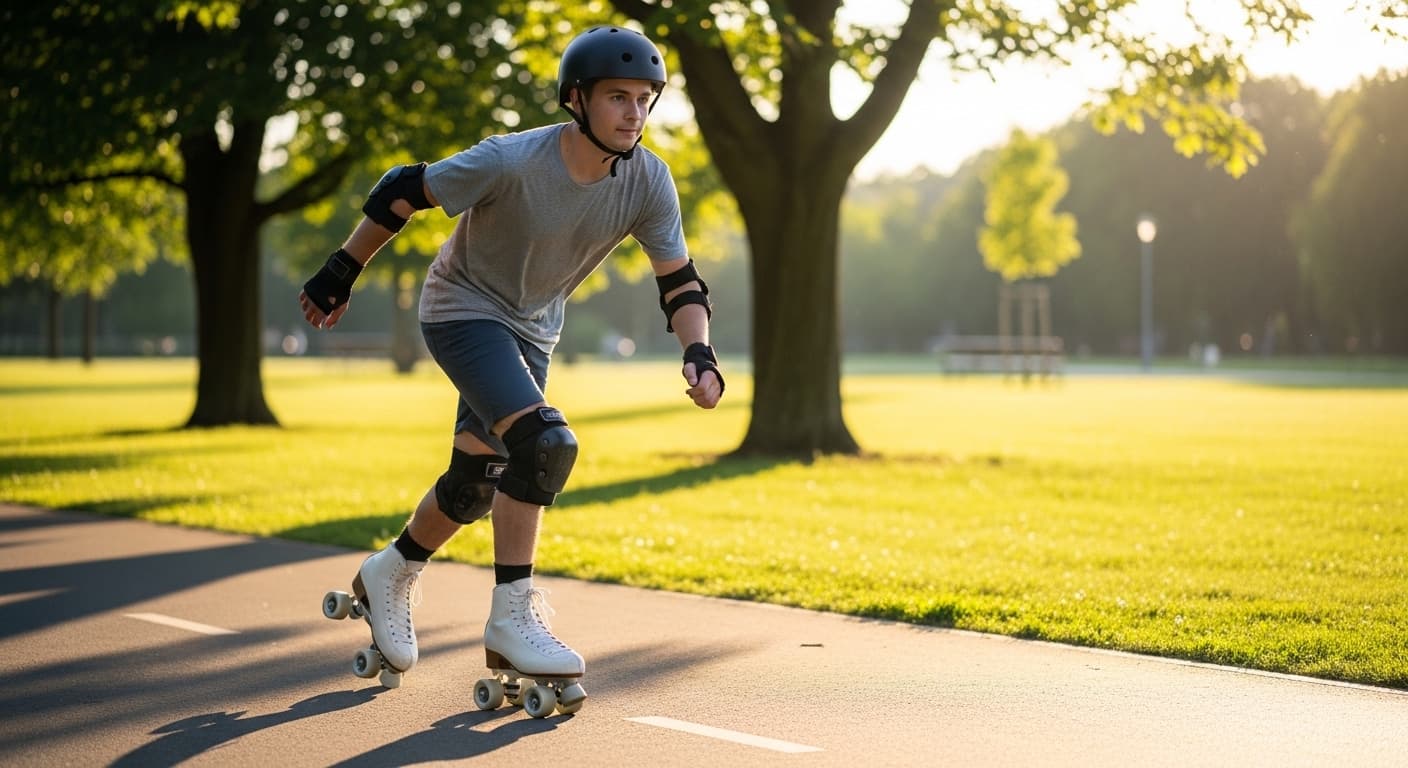
Roller skating for beginners takes three things: fitted skates, a helmet with wrist guards, and a flat forgiving surface. Start on grass or carpet, then move to smooth pavement with bent knees and small steps. Most adults feel steady within 3 to 5 sessions of 20 to 30 minutes each.
Learning how to roller skate for beginners is simpler than most people expect, as long as you start in the right order. Too many new skaters strap on a fresh pair, hit a smooth path, and try to roll before their feet have any idea what they are standing on. That is when the scary falls happen and the skates go back in the closet.
This guide walks you through the step by step path this guide recommends for brand new skaters: gear first, stance next, a careful first roll, a clean stride, a reliable stop, safe falling, and a simple four week practice plan. By the end, you will know exactly what to do in your first session, your first week, and your first month. For the bigger picture across every skating topic, pair this with the complete roller magic guide.
What does it take to learn how to roller skate for beginners
Learning how to roller skate for beginners takes three things: a pair of skates that fit, a safe flat surface, and short regular practice. Most adults feel shaky for the first session, steadier by the third, and in control after two to four weeks. Age and fitness matter less than consistency and patience.
Roller skating is a coordination skill more than a strength skill. Your feet need time to map the sensation of wheels under a boot. Your brain needs time to stop over correcting. Neither happens in one long session. It happens across many short ones. Published coaching resources point to the same fix over and over, and almost every beginner wobble traces back to a locked knee, not a weak leg.
Published beginner stories consistently show the same pattern. The common pattern is clear. Skaters who practice three times a week for twenty minutes improve faster than skaters who practice once a week for two hours. Frequency beats duration for beginners.
Expect some wobble. Expect a few controlled falls. Expect rapid progress once the first two or three sessions are behind you. Roller skating for beginners is a welcoming sport, not a punishing one, when you start in the right order.
What do you need before your first session
You need five items before your first session: fitted roller skates, a helmet, wrist guards, knee pads, and a flat forgiving surface. Wrist injuries are the single most common beginner injury because new skaters catch themselves with their hands. Organizations like USA Roller Sports treat full protective gear as the baseline for any first session, and we agree. Full gear lowers the risk and makes practice less stressful from day one.
Roller skates that actually fit
Fit matters more than brand, color, or price. Your toes should brush the front of the boot when you stand, then pull back a couple of millimeters when you bend your knees. Your heel should stay locked in place. A skate that slips at the heel or pinches across the top of your foot will frustrate you before the first stride.
Quad skates are the friendlier choice for learning how to roller skate. The four wheels in a rectangle under each boot give you a wider base at slow speeds. Inline skates roll faster and turn sharper, which many beginners find unsteady in the first few sessions.
Protective gear you should not skip
A certified helmet, wrist guards, knee pads, and elbow pads are the core four. If budget is tight, buy wrist guards first and a helmet second. The World Skate federation publishes safety guidance used across competitive skating disciplines, and protective gear is a standard recommendation for learners as well.
Our deeper walkthrough on what protective gear you need for roller skating covers helmet standards, pad sizing, and when to replace gear that has taken a hit.
A safe place to skate
Your first surface should be soft. Grass, carpet, or a rubber gym floor let you stand up in skates without rolling anywhere. When you move to rolling, choose smooth flat pavement in a quiet area. An empty parking lot early on a Sunday works well. A weekday rink session with rental priority for learners works even better.
What is the right stance and posture for roller skating
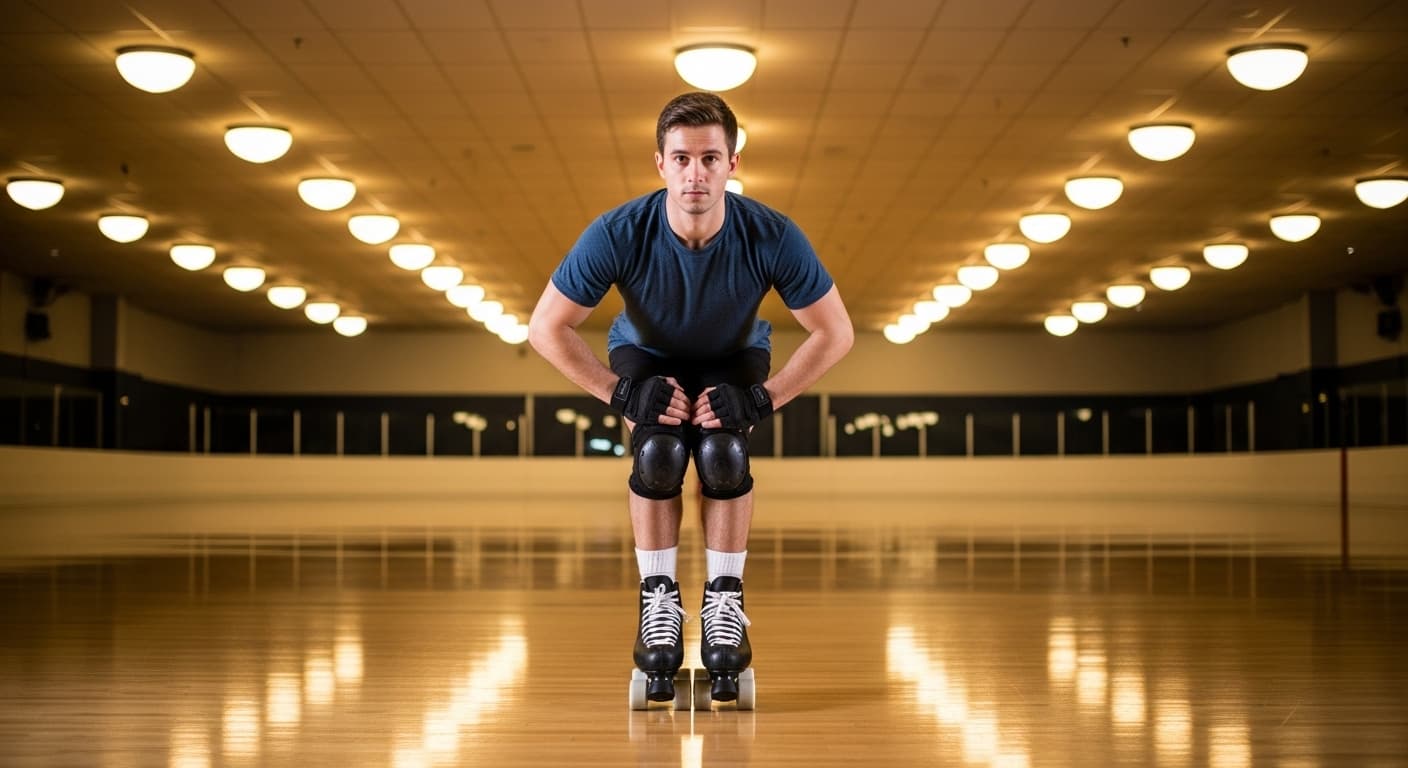
The right stance is feet shoulder width apart, knees bent, weight centered over the balls of your feet, chest slightly forward of your hips, and eyes looking ahead. Standing tall and stiff is the number one cause of beginner falls. A low bent stance keeps your balance point low and your reactions quick.
Knees, hips, and chest
Bend your knees until you can feel your quads working lightly. Push your hips back a touch so you feel planted through the balls of your feet. Let your chest drift forward until your shoulders sit roughly over your toes. If you fall backward, your chest is too upright. If you fall forward, your chest has gone too far.
Hands and eyes
Keep your hands out in front of you at waist height, not pinned to your sides. Forward hands help with counter balance and make it easier to protect yourself if you go down. Look ten to fifteen feet ahead, never down at your feet. Where your eyes go, your body follows.
For a full set of balance drills you can practice at home in under ten minutes, see our dedicated guide on how to balance on roller skates. It covers the ready position, slow weight shifts, and single leg holds.
How do you take your first steps on skates
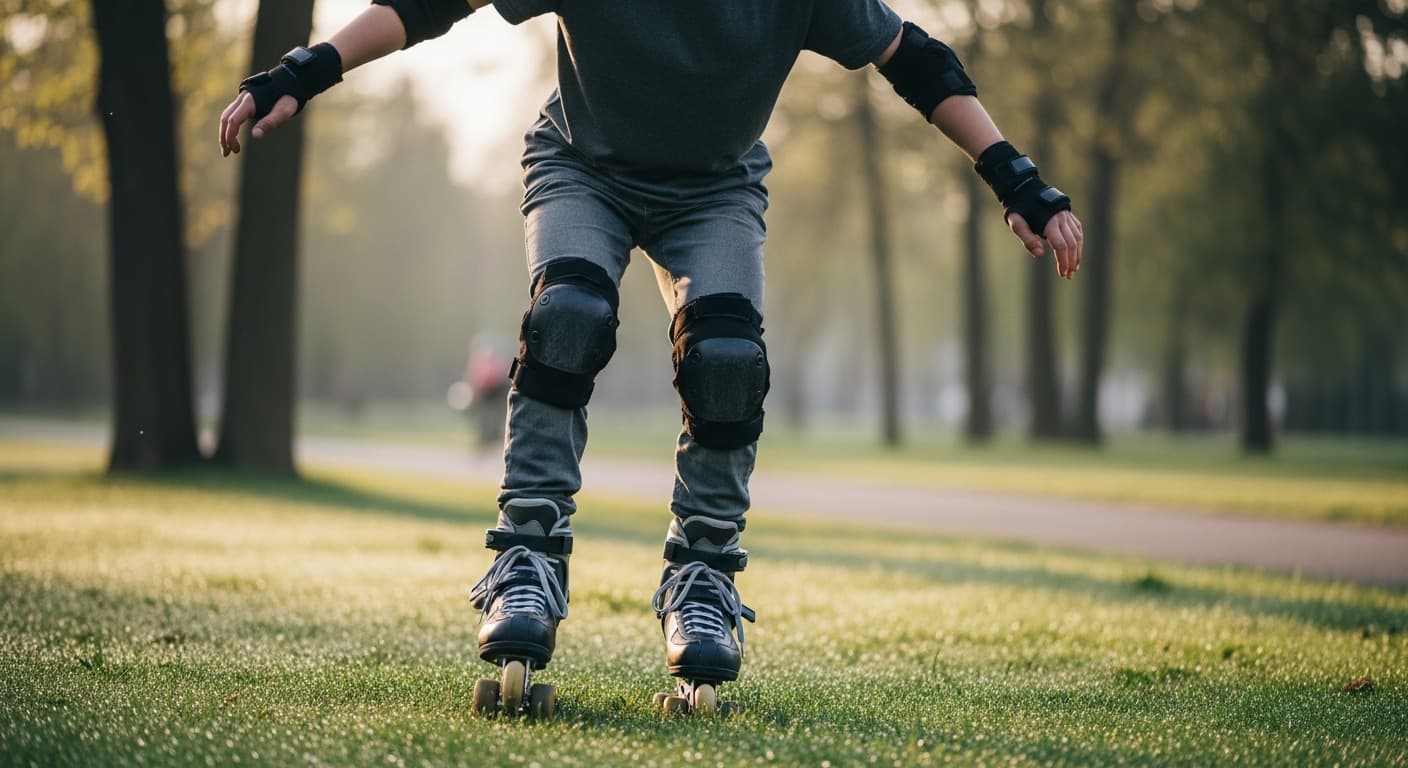
Take your first steps on grass or carpet, not on smooth pavement. Stand up in your skates, hold your stance, and walk forward in small duck like steps with your toes pointed slightly out. This feels silly and it is the safest way to meet your skates without rolling. Every coach in skating starts beginners here for a reason.
Step one, on grass
Stand still first. Hold the bent knee stance for thirty seconds. Now shift your weight from your left foot to your right foot without lifting your feet. Feel the small push from the ball of each foot. When that feels steady, lift one skate slightly and set it back down. Then the other. You are training your balance before motion becomes part of the equation.
Step two, small duck walks
On grass, walk forward with toes pointed out in a V shape. Small steps. Low stance. Keep looking ahead. Your wheels will dig into the grass and keep you from rolling away. This is the first time your body feels how a roller skate moves differently from a shoe, and grass is the safest place to meet that feeling.
Step three, flat smooth ground
Move to smooth flat pavement or a rink floor. Hold a wall or a stable rail at first if one is available. Repeat the duck walk. Then let the toes point forward and take tiny marching steps. You are allowed to roll a little on each step. This is normal and the start of real skating.
How do you move forward on roller skates
You move forward on roller skates by pushing one foot out to the side at a slight angle and gliding on the other, then repeating on the opposite side. This is called the stride, and it looks more like marching and then gliding than running. Forward motion comes from pushing sideways into the floor, not backward like walking.
The march
Start with a simple march. Stay low in your stance, pick one skate up a few centimeters, and set it down a short step forward. Then the other. Keep marching in place, then start covering small distance. The march teaches your body that lifting and placing a skate is a steady move, not a scary one.
The glide
Once the march feels natural, change one thing. Instead of setting the second skate down right away, let the first one roll for a second or two. That short roll is a glide. Then step down and push off the other side. March, glide, march, glide. This pattern is the heart of roller skating.
Push from the side
Here is the part most beginners get wrong. Your push does not go backward. Your push goes out to the side, with a slight rear angle, using the inside edge of the wheels. Think of a speed skater on ice. Each push sends the body forward and the pushing foot out to the side before it returns under the hip.
If strides still feel awkward after a few sessions, shorten them. Small strides at low speed teach the mechanics better than long strides at speed. Speed comes on its own after the movement is clean.
How do you stop safely on roller skates
The main stop for beginners on quad skates is the toe stop. Bring one foot slightly behind the other, lift that heel, and press the toe stop into the floor while bending your back knee. On inline skates, the heel brake does the same job. Slide the braked foot forward, lift the toes, and press the brake pad down. Practice both at walking pace first.
Toe stop on quad skates
Roll at slow speed. Slide one foot back a half step. Lift that heel so the toe stop points at the ground. Keep the front knee deeply bent and your weight on the front skate. Press the toe stop down with steady pressure. The roll slows, then stops. Fast jabs do not work, steady pressure does.
Wear the toe stop evenly by alternating which foot you stop with. Many beginners default to one side, wear that toe stop flat, and lose control on their weak side.
Heel brake on inline skates
On inline skates, the heel brake sits on the back of one boot. To stop, glide forward, slide the braked foot ahead of the other, lift the toes of that foot so the brake pad touches the floor, and press down with straight pressure through the leg. The other knee stays bent to hold you stable.
Build the habit early
Practice slow stops before you ever go fast. Ten slow toe stops at the start of every session for your first two weeks will pay back for the rest of your skating life. Every confident skater you see made the stop automatic before the speed came.
How do you fall safely and get back up
Falling well is a real skill, not a failure. The goal is to land on your pads, not your wrists or tailbone. To fall forward on purpose, bend your knees deeply, drop onto your knee pads first, then let your hands land on your wrist guards. Controlled practice falls take the fear out of a real one.
Fall forward, not backward
Forward falls are far safer than backward falls. Backward falls send you onto your tailbone, lower back, or the back of your head. If you feel yourself tipping backward, bend your knees fast, lower your hips, and try to rotate to the side so you land on a hip and pad rather than your spine. A helmet does the rest.
Getting back up
Come onto your hands and knees. Bring one skate forward so that foot is flat on the floor with your knee bent. Push down through that knee and the palms of your wrist guards. Stand up through the lead leg, then bring the back skate underneath your hips. Breathe, reset your stance, and keep skating.
For a full breakdown of falling drills, including the three point landing and the recovery stand, see our guide on how to fall safely on roller skates. Practicing these on a soft surface in full gear is one of the best uses of a first week.
What is a simple 4 week practice plan for beginners
A simple four week plan is three short sessions a week, thirty minutes each, with one skill focus per week: stance, stride, stop, and turns. Most beginners who keep this schedule feel in control of all four skills inside a month. Progress slows for skaters who skip weeks or try two hour sessions once a week.
Week 1: stance and standing
Three sessions on a soft surface or rink floor with a rail. Goal for the week is comfort standing still, slow weight shifts, small duck walks, and standing back up after a controlled fall. No fast rolling yet. Short, patient, safe.
Week 2: the stride
Three sessions on smooth flat ground. Goal is the march to glide pattern. Start with marches in place. Move to short rolls. Keep strides small. Finish each session with ten slow stops.
Week 3: stopping and control
Three sessions focused on stops. Practice toe stops or heel brakes at low speed, then at jogging pace. Add gentle direction changes by leaning slightly into the turn. Keep your knees bent through every stop and turn.
Week 4: putting it together
Three sessions linking it all. Cruise for a minute, stop, restart, turn, stop again. Try a longer session toward the end of the week if your legs feel ready. By the end of week four, most skaters can roll for five minutes straight, stop on command, and change direction without panic.
If this framework works for you, the next step is sharper technique. Our sibling guide on roller skating tips for beginners shares the small habits that turn safe skaters into smooth skaters.
What are the most common beginner mistakes to avoid
The most common beginner mistakes are standing too tall, looking down at the feet, skipping protective gear, starting on rough surfaces, and practicing too rarely. Each one slows learning and raises injury risk. Fix all five and your first month becomes dramatically easier.
Standing tall instead of bending the knees
A straight legged stance sends your weight high and your wheels everywhere. Bent knees keep your center of gravity low and give you room to absorb bumps. If you notice your legs getting tired fast, that is usually a sign your stance is right, not wrong.
Looking down at the feet
Eyes down means head down, shoulders down, and balance off. Look ten to fifteen feet ahead. Your feet know what they are doing once your stance is set. Trust them.
Skipping gear on short sessions
Many beginners wear full gear for the first session, then leave the wrist guards at home for the next one. Wrist injuries happen at slow speed and short sessions too. Gear up every time.
Starting on rough or sloped ground
Cracked sidewalks, sloped driveways, and loose gravel make beginners feel like they are losing control, because they are. Start smooth and flat for the first two or three weeks. Add challenging terrain later, not sooner.
Practicing once a week
Once weekly sessions feel like starting over every time. Three short sessions a week beat one long session. Ten minutes counts as a session if your stance and stops get a rep.
How to keep improving after your first month
After the first month, progress comes from practicing specific skills rather than free skating for time. Pick one skill per week: crossovers, backward skating, one foot glides, or quick stops. Short focused drills make each skill stick faster than open rolling.
Record a thirty second phone clip of yourself every two weeks. You will catch small habits like looking down or standing too tall that are hard to feel from the inside. Watching the clip back is one of the fastest feedback loops in skating.
Find a group or a rink with regular sessions. Skating communities are warm and patient with beginners, and rolling with others shortens the learning curve. Most rinks run beginner friendly sessions during weekday afternoons or early weekend mornings.
When you feel ready to match your skills to the right skate style for your goals, take our short skate recommendation quiz. It asks about your surface, your goals, and your current level, then matches you to a starting skate and a short list of models worth looking at.
Frequently Asked Questions
How long does it take to learn to roller skate as a beginner?
Most new skaters feel steadier by the third session and comfortable after three to four weeks of short regular practice. Balance, bent knees, and a flat forgiving surface matter more than age or athletic background. Ten to thirty minute sessions a few times a week beat one long day.
Is it easier to learn on quad or inline skates?
Quad skates are usually easier for a brand new skater. The four wheel base in a rectangle under each boot feels more stable at slow speeds. Many people start on quads, get the basics of balance and stopping, and then add inline skates later for longer outdoor sessions.
Where should a beginner roller skate for the first time?
Start on grass or carpet to feel your skates without rolling. Move to smooth flat ground next, like an empty parking lot on a quiet morning or a weekday rink session. Avoid busy paths, slopes, and rough pavement until your stance, stride, and stop feel reliable.
What gear do I really need to start roller skating?
A pair of fitted roller skates, a certified helmet, wrist guards, knee pads, and elbow pads cover the basics. Wrist guards matter most because wrist injuries are the most common beginner injury. Pads let you practice controlled falls without bruising, which speeds up the whole learning curve.
How do I stop on roller skates when I am a beginner?
On quad skates, bring one foot slightly back, lift the heel, and press the toe stop into the floor while bending your back knee. On inline skates, slide the braked foot forward and press the heel brake down. Practice stops at walking pace long before you try them at speed.
How often should a beginner roller skate each week?
Aim for three short sessions a week of twenty to forty minutes each. Frequency builds balance and muscle memory faster than one long session. Rest days help your feet, ankles, and core recover. Most beginners see the biggest jump in control between sessions four and eight.
Your next step
The fastest path for any beginner is to block three short practice sessions this week. Session one on grass. Session two on smooth flat pavement. Session three linking stance, stride, and a slow stop. If you follow the four week plan above, your first month will cover far more ground than most skaters manage in three.
Pick the next article in the roller magic guide that matches your next question, whether that is balance drills, falling safely, or choosing the right protective gear. And when you are ready to match your goals to a starting skate, take the skate recommendation quiz for a quick two minute match. For formal programs, the USA Roller Sports learn to skate curriculum and the World Skate skill framework both mirror the stance and stride drills covered here.
Frequently asked questions
Related reads
Your full roller magic guide to roller skating: beginner basics, skate buying tips, indoor vs outdoor, fitness benefits, parties, safety gear, and more.
17 min read
How to balance on roller skates: the exact stance, weight-shift drill, single-leg hold, and 3 proven home exercises beginners can use to stop wobbling.
11 min read
Learn how to stop on roller skates with 5 methods ranked by difficulty: toe stop, plow, T-stop, heel brake, and power slide, for quads and inlines.
13 min read
Roller skating tips for beginners that actually work. 20 practical tips on gear, stance, movement, and the mistakes to avoid on your first sessions.
14 min read
The best roller skates for beginners in 2026: fit, wheels, quad vs inline, budget tiers, 7 top models, and buying mistakes to avoid.
18 min read