beginners
How to Balance on Roller Skates Without Falling
How to balance on roller skates: the exact stance, weight-shift drill, single-leg hold, and 3 proven home exercises beginners can use to stop wobbling.
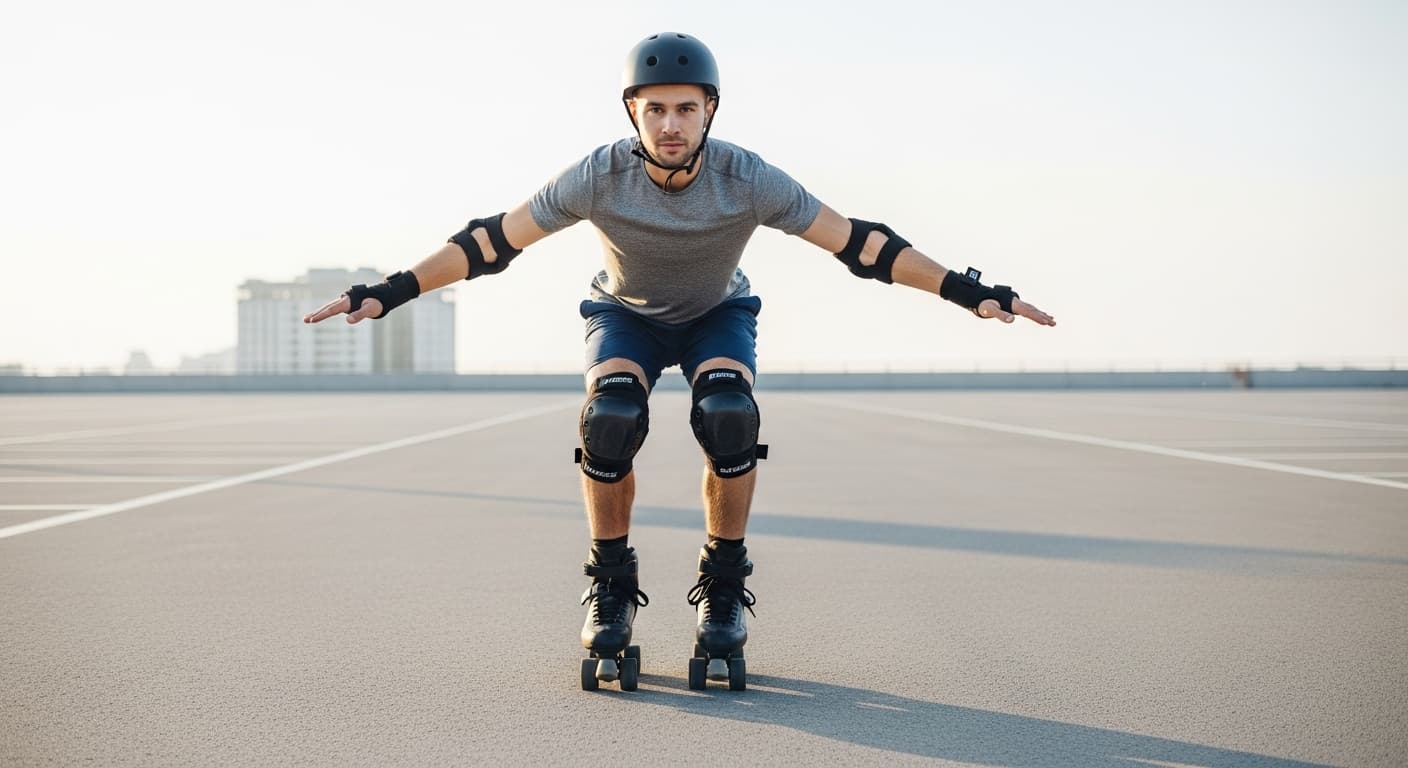
The correct stance for roller skate balance is feet shoulder-width apart, knees bent, weight over the balls of the feet, and eyes looking 10 to 15 feet ahead. Most beginners feel stable after 3 to 5 practice sessions of 30 minutes each. Bent knees fix the majority of early wobble.
Learning how to balance on roller skates is the first real skill you build, and the one everything else sits on top of. Skaters who get their stance and weight shift right in the first two or three sessions progress faster, fall less, and feel more confident rolling at any speed. Skaters who skip the basics spend weeks fighting a shaky stance that keeps coming back.
This guide covers the core balance skills this guide recommends for beginners: the right stance, the drills that train it, and the off-skate work that speeds everything up. For a broader beginner roadmap, pair this with our guide on how to roller skate for beginners.
What is the right stance for balancing on roller skates?
The right stance for roller skate balance is feet shoulder-width apart, knees bent until your quads feel lightly loaded, weight centered over the balls of your feet, chest slightly forward of your hips, and hands in front at waist height. That low, centered position keeps your center of gravity stable over moving wheels and gives your legs room to absorb bumps without tipping you over.
Most beginners stand too tall. A straight-legged stance sends your weight high and lets every tiny wobble grow into a fall. Bending your knees is the single most effective balance fix in skating. If your thighs feel lightly worked after standing still for thirty seconds, your stance is probably right. Published coaching resources point to this one adjustment more than any other, and it almost always turns a shaky first roll into a steady one inside a single session.
Your eyes also matter. Look ten to fifteen feet ahead at a fixed point, not down at your skates. Eyes down pulls your chin, rounds your shoulders, and moves your weight behind your heels. Heels on rolling wheels means a backward fall. Eyes up keeps your whole chain of posture in place.
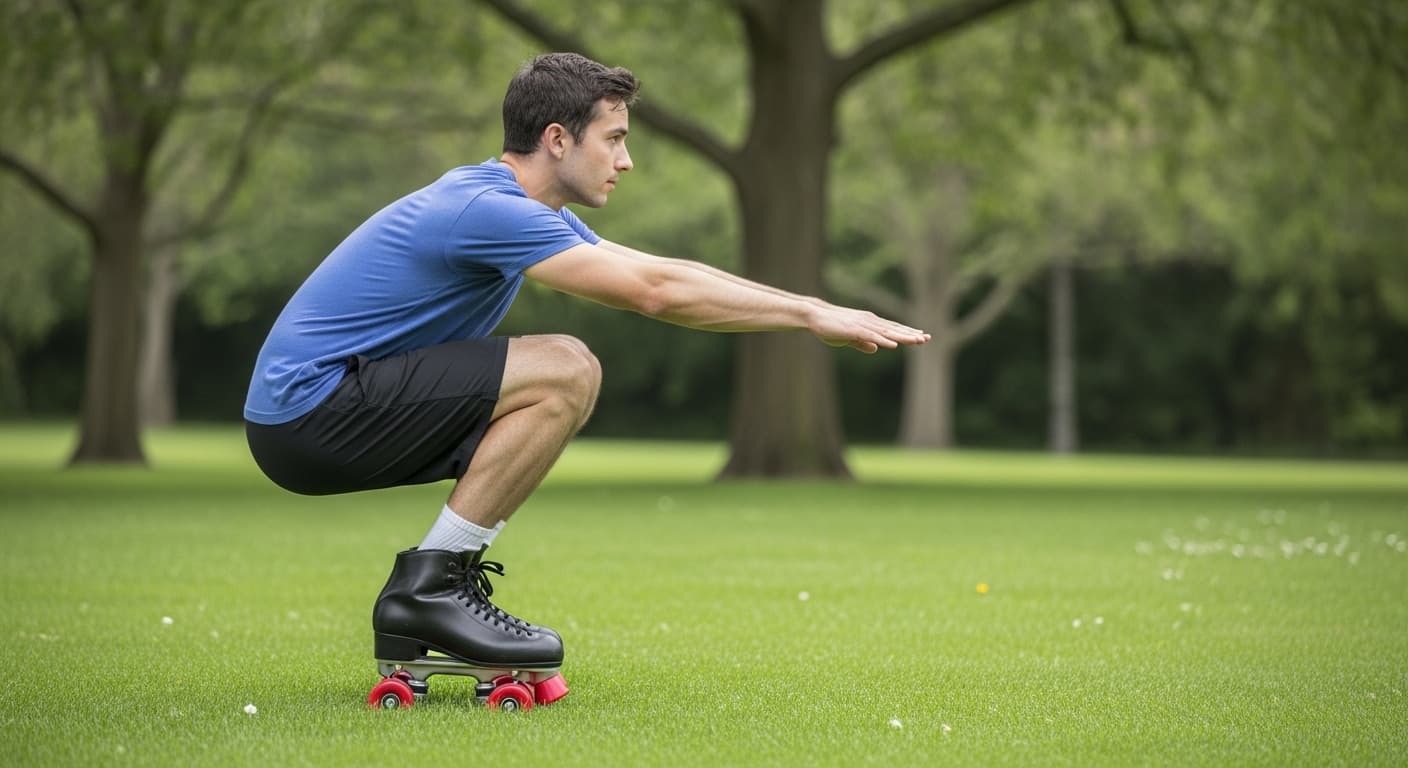
How do you do the ready position drill?
The ready position drill trains your body to default to a balanced stance before motion enters the picture. Stand still on your skates on grass or carpet, hold the correct stance described above for thirty seconds, and repeat three times. That is the whole drill. The value is that your nervous system learns what balanced feels like before the complication of rolling wheels is added.
Most new skaters skip this step and move straight to rolling. That forces the body to learn stance and motion at the same time, which is harder than learning each separately. Three sets of thirty seconds on a forgiving surface costs less than five minutes and removes one major variable from every session that follows.
Once standing still feels easy, add a slight forward lean and let yourself roll a foot or two before resetting. That micro-roll is the bridge between stillness and the first real stride. Guidance from USA Roller Sports and most rink learn-to-skate programs begin every first session exactly this way: stance before motion, always.
How does weight transfer work on roller skates?
Weight transfer is the foundation of every stride, turn, and stop in roller skating. To practice it, stand in your correct stance and slowly shift your weight from your left foot to your right foot without lifting either skate. Feel the subtle push from the ball of each foot. Then shift back. Keep your knees bent throughout. That side-to-side shift, done cleanly and deliberately, is the skeleton of the skating stride.
Most beginners think skating is about pushing backward. It is not. Each stride is a weight shift onto the support foot while the push foot presses sideways and slightly back. If your weight transfers feel shaky, your stride will feel shaky. If they feel solid, your stride comes together quickly.
Practice ten slow weight shifts at the start of every session for your first two weeks. Keep the shifts even and controlled. The goal is not distance or speed. The goal is a clean transfer where your balance stays centered throughout the movement, not tipping forward or backward as the load moves from foot to foot.
What is the single leg hold and why does it matter?
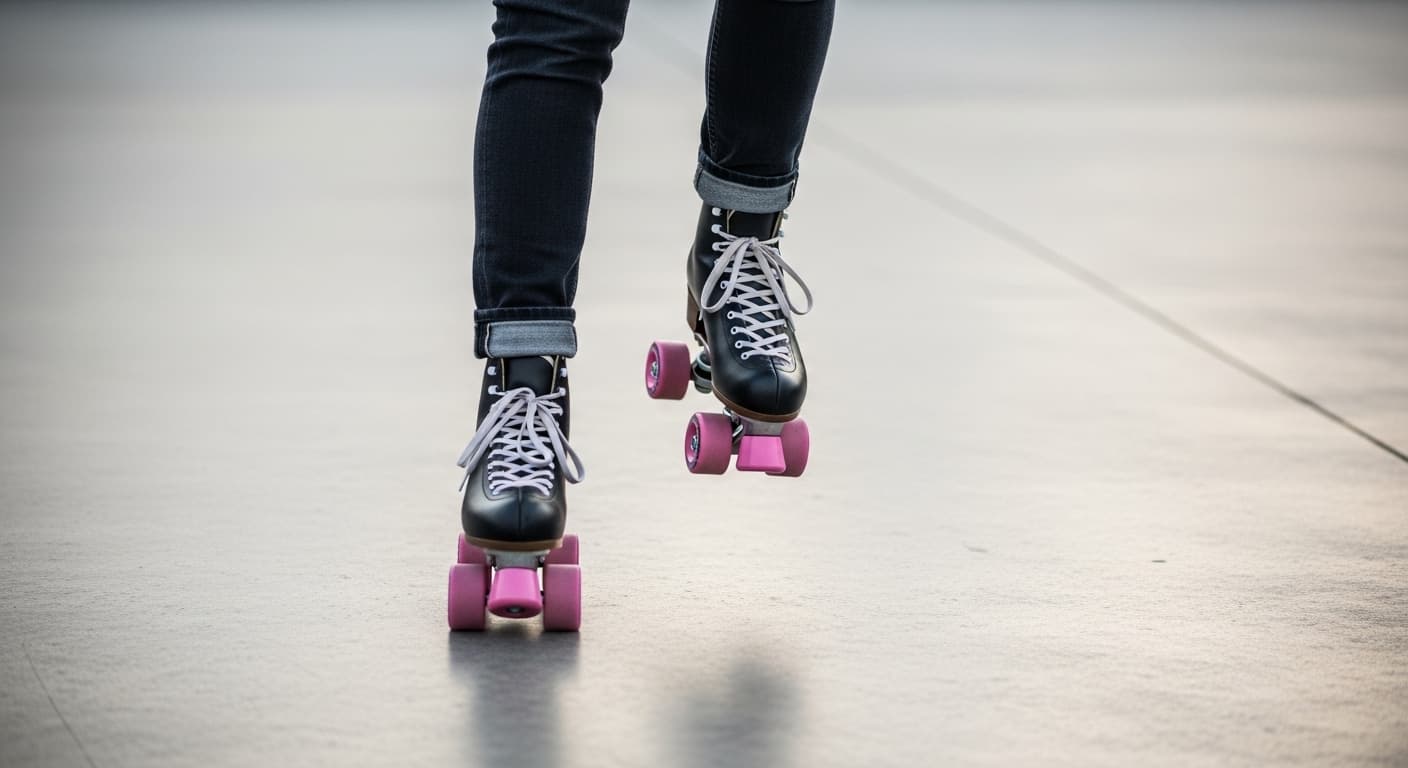
The single leg hold is the drill that takes balance from two-foot stability to one-foot skating control. Once your weight transfers feel solid, lift one skate about an inch off the ground and hold for five seconds while balancing on the other foot. Then switch. The standing leg gets loaded the same way it does during a real stride, and your hip stabilizers and core learn to keep you upright on a single wheel base.
This drill is harder than it sounds for most beginners because the hip stabilizers, particularly the glute medius, are undertrained in people who sit most of the day. The wobbling you feel in the first attempts is the right muscles being asked to work for the first time. Stick with it. Most skaters feel a noticeable improvement in single leg holds after five or six sessions.
Build up gradually. Start with three-second holds, add a second each session, and work toward ten-second holds with calm knees and a quiet upper body. Once ten seconds on each side feels easy on a flat surface, try it with a slow roll for two or three feet before recovering the raised foot.
What off-skate balance exercises help the most?
Off-skate balance work is one of the fastest ways to improve roller skating balance without putting skates on. Standing on one leg for thirty seconds, slow single-leg squats, and ankle circles all train the stabilizer muscles your skating needs. The World Skate federation recommends supplementary balance training as part of structured learn-to-skate programs at every level. Ten minutes a day of off-skate work translates directly to faster progress on wheels.
Standing on one leg
Do this while brushing your teeth, cooking, or waiting for anything. Stand barefoot on one foot for thirty seconds. Close your eyes to make it harder. Switch sides. This loads your ankle stabilizers and glute medius in the same pattern as a skating stride.
Slow squats with weight centered
Stand with feet shoulder-width apart and lower slowly for a count of four, pause at the bottom, and rise for a count of four. Keep your weight on the balls of your feet throughout. This builds the quad and glute strength that holds your skating stance when you are tired.
Ankle circles and toe raises
Sit in a chair and trace large circles with your toes in both directions. Then stand with both feet flat and rise up onto your toes, hold for two seconds, and lower slowly. Repeat ten times. Calves and ankle stabilizers are the fine-tuning muscles in skating. Stronger ankles mean less wobble and more precise weight transfer.
How do you stop ankle wobble on roller skates?
Ankle wobble on roller skates almost always comes from one of two causes: loose laces at the top of the boot, or undertrained ankle stabilizers. The HHS Physical Activity Guidelines highlight balance work as a pillar of safe adult physical activity, which is why targeted ankle and hip training pays off so quickly for skaters. Fix the laces first. Start at the toe and pull each pair of eyelets firm, finishing with the top two hooks pulled tight. A properly laced boot with a locked heel removes most of the wobble that new skaters blame on their ankles.
If the laces are tight and the wobble persists, the cause is muscle weakness. Your ankle stabilizers and glute medius need time to adapt to rolling balance. The off-skate drills in the section above address this directly. Most skaters see noticeable improvement in ankle steadiness after two to three weeks of combined on-skate sessions and daily off-skate work.
Skate-specific ankle strengthening also helps. Toe raises, heel walks, and single-leg stands are all accessible without any equipment. Add them to your morning routine and you will feel the difference by the end of your first month of skating.
How long does it take to feel balanced on roller skates?
Most beginners feel noticeably more stable after three to five sessions of thirty minutes each, and genuinely comfortable within two to four weeks of skating three times per week. Balance in skating is a coordination skill, not a strength skill. Your nervous system needs repeated exposures to the sensation of wheels under a boot before it stops treating every tiny motion as a crisis.
Published beginner stories consistently show the most common pattern is this: shaky and nervous in sessions one and two, meaningfully steadier by session three, in control of basic stance and weight transfer by the end of week two. From there, each session adds a layer. Single leg balance, slow turns, comfortable stops. Progress compounds once the fundamentals are solid.
Frequency matters more than duration. Three sessions of twenty minutes a week outperform one session of an hour for balance development. Short repeated exposures let your nervous system consolidate each gain before the next session adds something new. If you can only skate once a week, add the off-skate drills daily to keep the adaptation moving between sessions.
Frequently Asked Questions
How long does it take to learn to balance on roller skates?
Most beginners feel stable after three to five practice sessions of thirty minutes each. Balance depends on core strength and practice frequency more than age or athletic ability. Skaters who add off-skate balance drills between sessions progress about twice as fast as those who only skate.
Can I practice balance off-skate?
Yes. Standing on one leg, weighted squats, and wobble board work all translate directly to on-skate balance. Ten minutes a day of off-skate balance work speeds on-skate progress significantly and costs no extra gear or rink time.
Why do my ankles wobble when I stand on roller skates?
Ankle wobble usually means loose laces or weak stabilizer muscles. Tighten your top two eyelets first, then add ankle strengthening exercises like toe raises and heel walks to your routine. Most wobble resolves within two to three weeks of consistent practice.
Is it normal to feel scared the first time I stand on roller skates?
Absolutely. Your nervous system is recalibrating to new footwear. Practice on grass or carpet for the first session so falling is soft, and the fear fades within one to two sessions. Full protective gear, especially wrist guards and a helmet, also reduces fear by removing the worst-case consequence.
What is the correct skating stance for beginners?
Feet shoulder-width apart, knees bent so your quads feel lightly loaded, weight over the balls of your feet, chest slightly ahead of your hips, and hands in front at waist height. That low centered position keeps your wheels predictable at any speed.
Should I look down at my skates while learning to balance?
No. Looking down drops your chin, rounds your shoulders, and shifts your weight behind your heels. Pick a fixed point at eye level ten to fifteen feet ahead and hold it. Where your eyes go, your balance follows.
Your next step
The fastest path to solid balance is three short sessions this week plus daily off-skate work between them. Start each session with the ready position drill, move into weight transfers, then add single leg holds as they feel stable. Most beginners who follow that pattern feel meaningfully different by session five.
When your balance feels reliable, the next skill to build is a clean stop. Our guide on how to stop on roller skates covers five methods ranked by difficulty. Before that, if you still want to walk through the full beginner framework, the how to roller skate for beginners guide ties stance, stride, and stopping into one four-week plan. And for gear that supports your balance work, see our notes on what protective gear you need for roller skating. If you want to progress toward artistic or competitive skating, World Skate publishes official skill grading standards for every discipline.
Frequently asked questions
Related reads
Learn how to roller skate for beginners with a step by step guide: gear, stance, first strides, stopping, falling safely, and a 4 week practice plan.
19 min read
Learn how to stop on roller skates with 5 methods ranked by difficulty: toe stop, plow, T-stop, heel brake, and power slide, for quads and inlines.
13 min read
Roller skating tips for beginners that actually work. 20 practical tips on gear, stance, movement, and the mistakes to avoid on your first sessions.
14 min read
Your full roller magic guide to roller skating: beginner basics, skate buying tips, indoor vs outdoor, fitness benefits, parties, safety gear, and more.
17 min read
The best roller skates for beginners in 2026: fit, wheels, quad vs inline, budget tiers, 7 top models, and buying mistakes to avoid.
18 min read