beginners
20 Roller Skating Tips for Beginners That Actually Work
Roller skating tips for beginners that actually work. 20 practical tips on gear, stance, movement, and the mistakes to avoid on your first sessions.
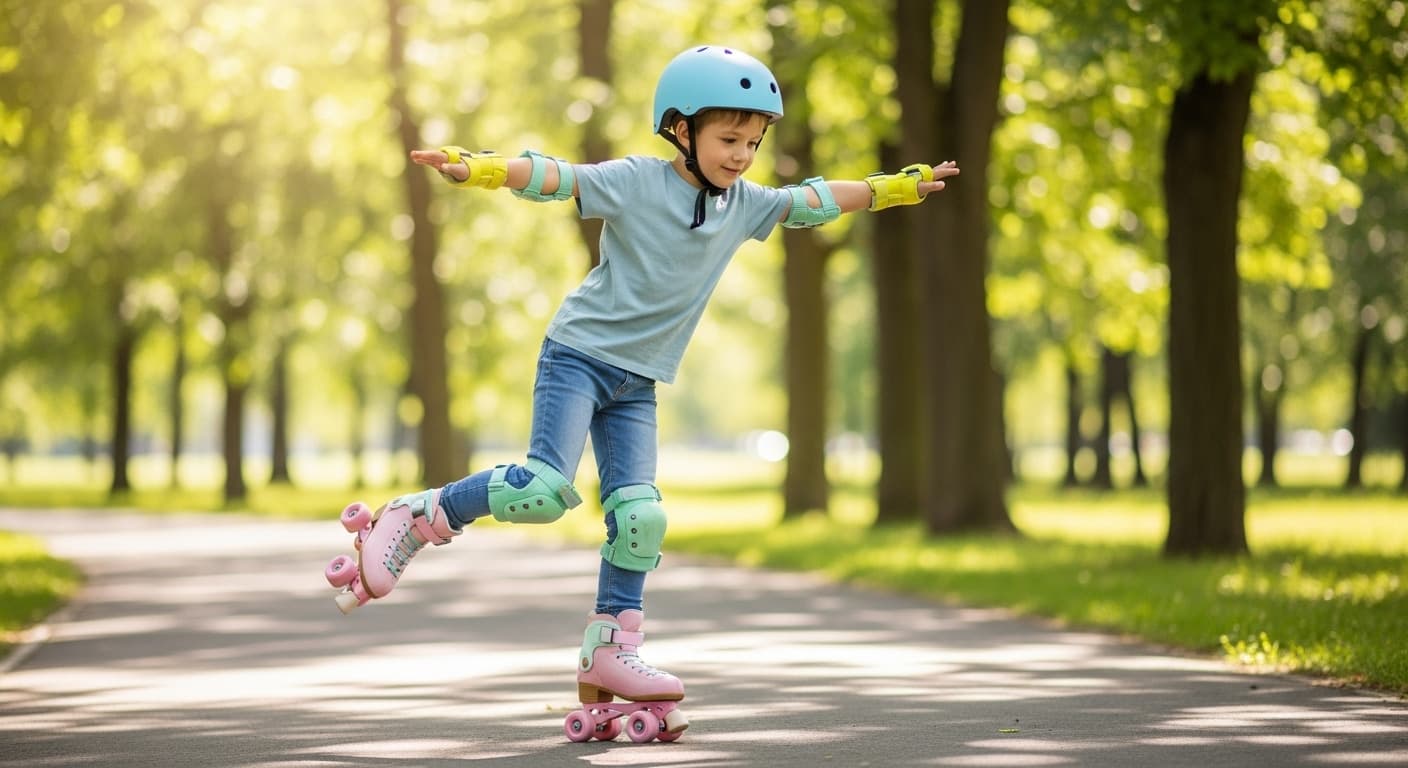
The three roller skating tips that matter most for beginners are bent knees, eyes forward, and small steps before gliding. Three short 20-minute sessions per week beat one long weekend outing. Most adults feel steady by session three and confident within two to four weeks of regular practice.
Good roller skating tips are the fastest shortcut between your first shaky session and the moment everything clicks. Skating is a skill anyone can learn, but the early days feel slippery, awkward, and sometimes a little scary. Most of that disappears when you stop guessing and start using the small adjustments experienced skaters already know.
This guide collects the roller skating tips for beginners that beginner skate communities consistently show working across rinks, bike paths, and home garages. Each tip is a short fix you can apply in your next session. Nothing here is complicated, and nothing requires fancy gear. Read through, pick two or three to try first, and come back for the rest once those feel natural. If you want the bigger picture, the complete roller magic guide ties every beginner topic together.
What are the 3 roller skating tips for beginners that matter most?
If you only remember three roller skating tips for beginners, make them these: bend your knees deeper than feels natural, look where you want to go, and take small steps before you try to glide. Those three habits fix the majority of early balance problems. Every other tip on this page supports one of them.
Bent knees lower your center of gravity so little bumps stop throwing you off. Looking ahead keeps your shoulders stacked over your hips, which is where balance actually comes from. Small steps train your feet to push and recover without panic. New skaters who follow these three stay upright more often, fall more safely when they do go down, and build confidence faster than skaters chasing speed first.
Once those three feel automatic, you are ready to work on stance details, gear setup, and smoother movement. The rest of this page breaks the skill down tip by tip.
What gear and setup tips help you skate better?
The best roller skating tips for beginners start with gear. Skates that fit snugly, wheels matched to your surface, and healthy bearings make every other tip in this guide land harder. Pads that fit correctly let you practice falling drills without pain, which speeds up progress more than any single technique tweak. Safety guidance from World Skate and most rink programs treats a helmet as the baseline before any of these other fixes matter.
Tip 1: Lace your skates from the toe up, snug at the ankle
Most ankle wobble comes from loose top eyelets, not weak ankles. Start at the toe, pull each eyelet firmly, and finish tight across the top two hooks. A skate laced this way holds your heel in place and stops the boot from folding sideways when you push. Re-check the top eyelets every fifteen minutes during your first few sessions because laces settle.
Tip 2: Match your wheels to your surface
Indoor rink wheels are hard and fast. Outdoor wheels are softer so they absorb cracks and gravel. Skating outdoor on indoor wheels feels like trying to skate on marbles. Wheel hardness is printed on the wheel as a number with the letter A: 78A to 85A for outdoor, 88A and above for indoor. A cheap set of outdoor wheels changes everything if you are bouncing off every pebble.
Tip 3: Check your bearings before every session
Spin each wheel with a finger. It should rotate for several seconds without grinding. Short spins and crunchy sounds mean dirty or worn bearings. Clean or replace them. Slow wheels make you work harder, which forces bad stance to compensate. This is a two minute check that most new skaters skip for months.
Tip 4: Fit your pads tight but not pinched
Wrist guards, knee pads, and elbow pads only protect you if they stay in place during a fall. Straps should be firm enough that the pad does not rotate when you slap it. A pad that slides off at impact is the same as no pad at all. Replace any pad whose plastic splint has cracked.
Tip 5: Start with a helmet, not as an upgrade
A certified helmet is not an advanced gear item. It is the first thing to buy. Skating falls often go backward, which is exactly the impact a helmet is built for. Brands approved by USA Roller Sports for training and competition are a safe starting point.
How should your stance and body position look?
Your stance is doing most of the work. A quiet, balanced stance makes the skates feel predictable. A rigid or tilted stance makes every tiny road bump feel like an earthquake. These stance tips are the ones rink coaches and beginner forums describe beginners underestimating most often, and the ones most likely to fix a rough session without any new gear.
Tip 6: Bend your knees until it feels silly
Most new skaters think their knees are bent when they are barely flexed. A good skating bend puts your knees forward of your toes when you look down, not tucked behind. This lowers your center of gravity and lets your legs absorb bumps. If your thighs start burning after a few minutes, your stance is probably correct.
Tip 7: Keep your eyes up and looking forward
Staring at your feet feels safer. It is not. When your chin drops, your shoulders round, your hips slide back, and your weight ends up over your heels. Heels plus rolling wheels equals a fall. Pick a point at eye level ten feet ahead and let your skates work underneath you.
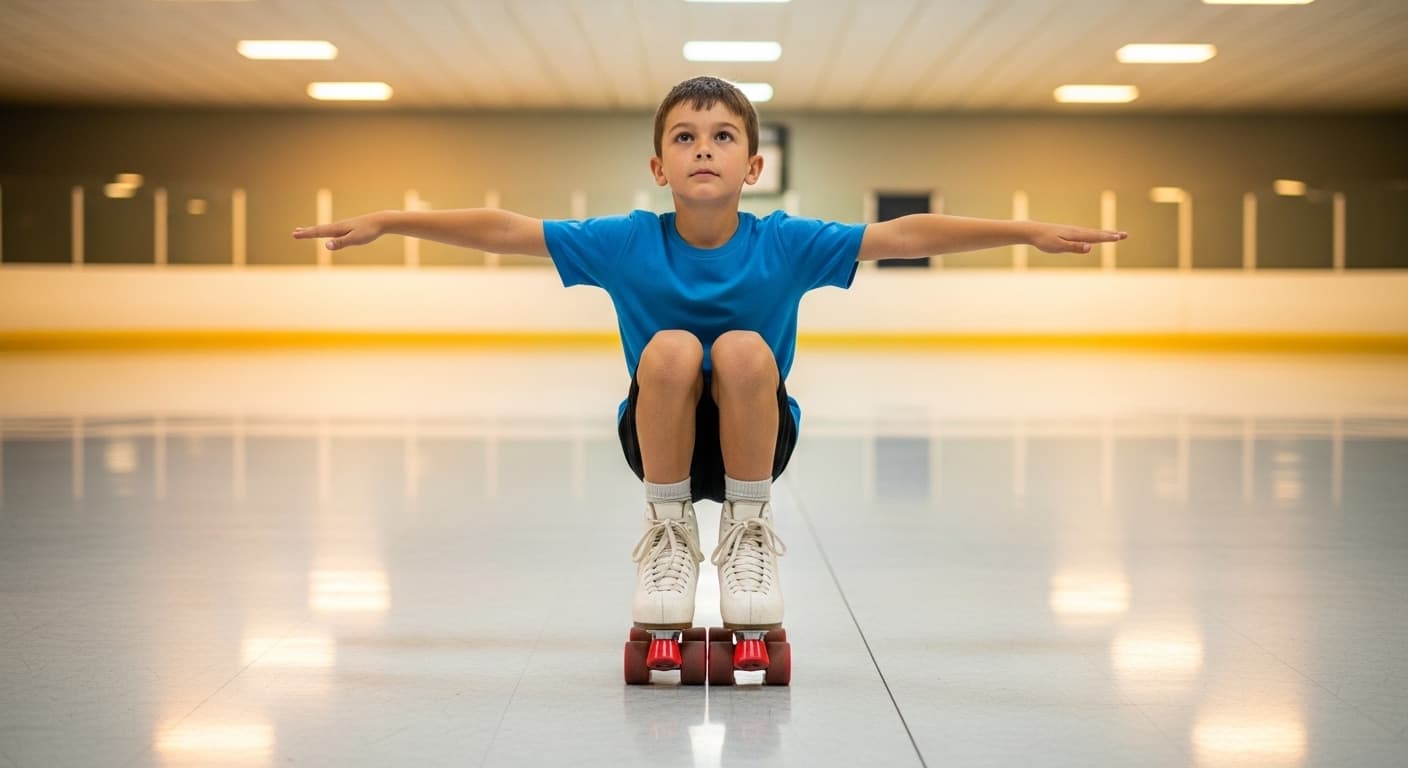
Tip 8: Use your arms as balance wings
Arms out at roughly hip height, slightly in front of your body, palms facing down. This gives your balance system constant feedback and a recovery tool if you wobble. Tucked arms rob you of that feedback. Flailing arms throw you around. Calm wings in a steady position is the target.
Tip 9: Keep your core gently active
Skating balance is not all leg work. A light core squeeze keeps your torso stacked over your hips instead of collapsing forward or backward. Think of it as zipping up a jacket slowly. You do not need rigid abs, just enough tone to hold your spine in place. This one tip quietly fixes a lot of upper body wobble.
Tip 10: Point your toes slightly outward
A narrow V stance, heels close and toes angled out, is the default starting position for quad skates. It makes pushing off into a stride natural and keeps your feet from crossing. Parallel feet feel stable when standing still, but they make the first push awkward.
What movement and speed tips build smooth strides?
Smooth movement looks like skating. Jerky shuffling does not. The difference is rhythm, weight transfer, and push direction. These tips are about turning those awkward first shuffles into a steady stride you can hold for twenty minutes without getting tired or losing control. Movement is also where stopping lives, and stopping is the skill that protects everything else.
Tip 11: Push sideways, not backward
New skaters try to push off behind them like walking. Skates do not work that way. Your push goes sideways, from the inside edge of one skate outward, while your other skate rolls forward. Think of the letter V opening and closing. Once this clicks, you stop shuffling and start gliding.
Tip 12: Take small steps first, long strides later
Tiny quick steps train your feet to recover fast, which is exactly what you need when your balance is still new. Long smooth strides come later, once your push-and-recover rhythm is automatic. Rushing straight into long strides before you can control small steps is how most early falls happen.
Tip 13: Practice stopping on session one
Before you worry about going fast, build a stopping habit. The toe stop on quads and the heel brake on inlines both need repetition at slow speed before real speed shows up. For a complete walkthrough of every beginner stopping method, see our guide on how to stop on roller skates. Do not wait for a panic moment to try your first stop.
Tip 14: Skate to music with a steady beat
A consistent beat gives your push-and-glide rhythm a metronome. Songs in the 100 to 120 beats per minute range work well for beginner stride practice. Music also pulls your focus off your feet, which loosens tight hips and lets your stance relax.
Tip 15: Let your head lead turns
To turn, look in the direction you want to go first. Your shoulders follow your head, your hips follow your shoulders, and your skates follow your hips. Trying to steer from your feet first almost never works. The eyes-first rule fixes most beginner turning trouble in a single session.
What are the most common roller skating mistakes to avoid?
Every new skater makes most of these mistakes at least once. The good news is each one has a fast fix. Beginner forums repeat the same handful of complaints from beginners across rink programs, and every complaint traces back to one of the habits below. Catching these early is the quickest way to improve roller skating comfort and confidence.
Tip 16: Stop leaning backward when you feel scared
Leaning back is the single biggest beginner mistake. When wheels start rolling, the instinct is to pull your upper body away from the ground. That shift moves your weight behind your heels, locks your knees, and almost guarantees a fall backward. The fix feels counterintuitive: bend forward at the knees and hips a little more when you feel nervous, not less.
Tip 17: Stop looking down at your feet
Eyes on your skates pulls your shoulders forward, rounds your back, and drops your hips behind your heels. It feels like looking gives you control. It actually takes balance away. Every session, remind yourself to pick a point ahead and hold it. This one change often fixes a session that is going badly.
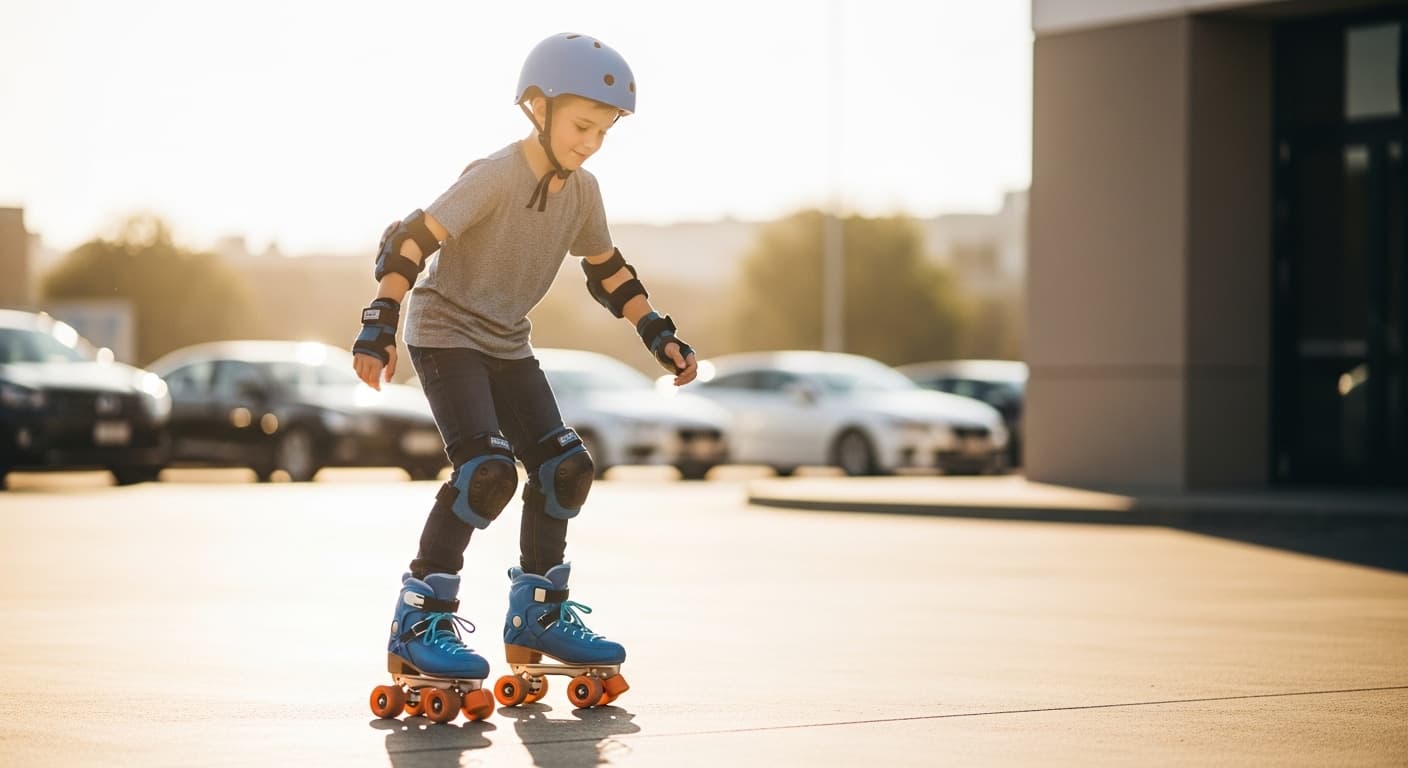
Tip 18: Stop locking your knees
Straight legs pass every bump straight into your hips and lower back. They also steal your shock absorption, which is what bent knees provide. If your thighs do not feel slightly worked after fifteen minutes of skating, you are probably standing too tall. Soft knees at all times.
Tip 19: Do not skip the warmup
Cold calves and stiff hips make every tip on this page harder to apply. Five minutes of ankle circles, slow squats, and gentle leg swings before you strap in wakes up the muscles your skating actually uses. Skaters who warm up fall less and feel stronger through the back half of a session.
Tip 20: Do not practice on bad surfaces
Bumpy sidewalks, loose gravel, wet pavement, and steep hills are not beginner terrain. They turn small mistakes into big falls. A smooth flat parking lot, a quiet rink session, or a long empty bike path early in the morning is the kind of ground that rewards practice instead of punishing it. Save rough terrain for later.
Where do you go from here as a beginner skater?
The short answer: keep sessions short, stack them close together, and work one tip at a time. Pick three tips from this page, skate for thirty minutes, and focus only on those. Next session, pick three more. Inside a month you will feel a different skater underneath you.
When forward skating feels easy, the next two skills worth exploring are backward movement and basic tricks. Both build on the stance, push, and balance habits above. See our guides on how to roller skate backwards and roller skating tricks for beginners when you are ready. If you still want to walk through the forward-skating basics more carefully first, the full how to roller skate for beginners guide is a good place to spend a session.
Not sure which skate style or wheel setup fits you best? Take our short skate recommendation quiz. It asks about your surface, your goals, and your experience, then points you to a starting skate and wheel pairing that matches. It takes about two minutes and saves you from the common first-purchase mistakes.
Frequently Asked Questions
What are the best roller skating tips for beginners?
Bend your knees, keep your eyes up, and take small steps before you try to glide. Those three basics fix most early balance problems. Pair them with properly laced skates, fresh bearings, and short repeated practice sessions rather than one long session.
How long does it take to feel comfortable on roller skates?
Most adults feel shaky in session one, steadier by session three, and relaxed inside two to four weeks of short regular practice. Kids often pick it up faster. The speed of progress depends on session frequency far more than session length.
What is the biggest mistake beginner roller skaters make?
Leaning backward. When a new skater feels off balance, the instinct is to pull away from the ground, which throws the hips behind the heels and locks the knees. The fix is to bend your knees, push your chest forward, and look ahead.
Should beginners learn on quad skates or inline skates?
Quad skates are usually easier at the start because the four-wheel base is more stable at slow speeds. Inline skates roll faster and carve sharper, which many skaters enjoy later. Either style works if it fits well and matches your goals.
How often should a beginner practice roller skating?
Three short sessions a week beats one long weekend session. Twenty to thirty minutes of focused practice lets your balance system absorb the skill without wearing your legs out. Consistency is the factor that matters most for beginner roller skating progress.
Do I need a rink to improve as a beginner?
No. A smooth empty parking lot, a quiet bike path, or even a garage floor works for early practice. Rinks are great for music, community, and predictable surfaces. Outdoor skating builds balance faster because the terrain varies.
Frequently asked questions
Related reads
Your full roller magic guide to roller skating: beginner basics, skate buying tips, indoor vs outdoor, fitness benefits, parties, safety gear, and more.
17 min read
Learn how to roller skate for beginners with a step by step guide: gear, stance, first strides, stopping, falling safely, and a 4 week practice plan.
19 min read
Learn how to stop on roller skates with 5 methods ranked by difficulty: toe stop, plow, T-stop, heel brake, and power slide, for quads and inlines.
13 min read
How to balance on roller skates: the exact stance, weight-shift drill, single-leg hold, and 3 proven home exercises beginners can use to stop wobbling.
11 min read
The best roller skates for beginners in 2026: fit, wheels, quad vs inline, budget tiers, 7 top models, and buying mistakes to avoid.
18 min read