skills
How to Stop on Roller Skates: 5 Methods Explained
Learn how to stop on roller skates with 5 methods ranked by difficulty: toe stop, plow, T-stop, heel brake, and power slide, for quads and inlines.
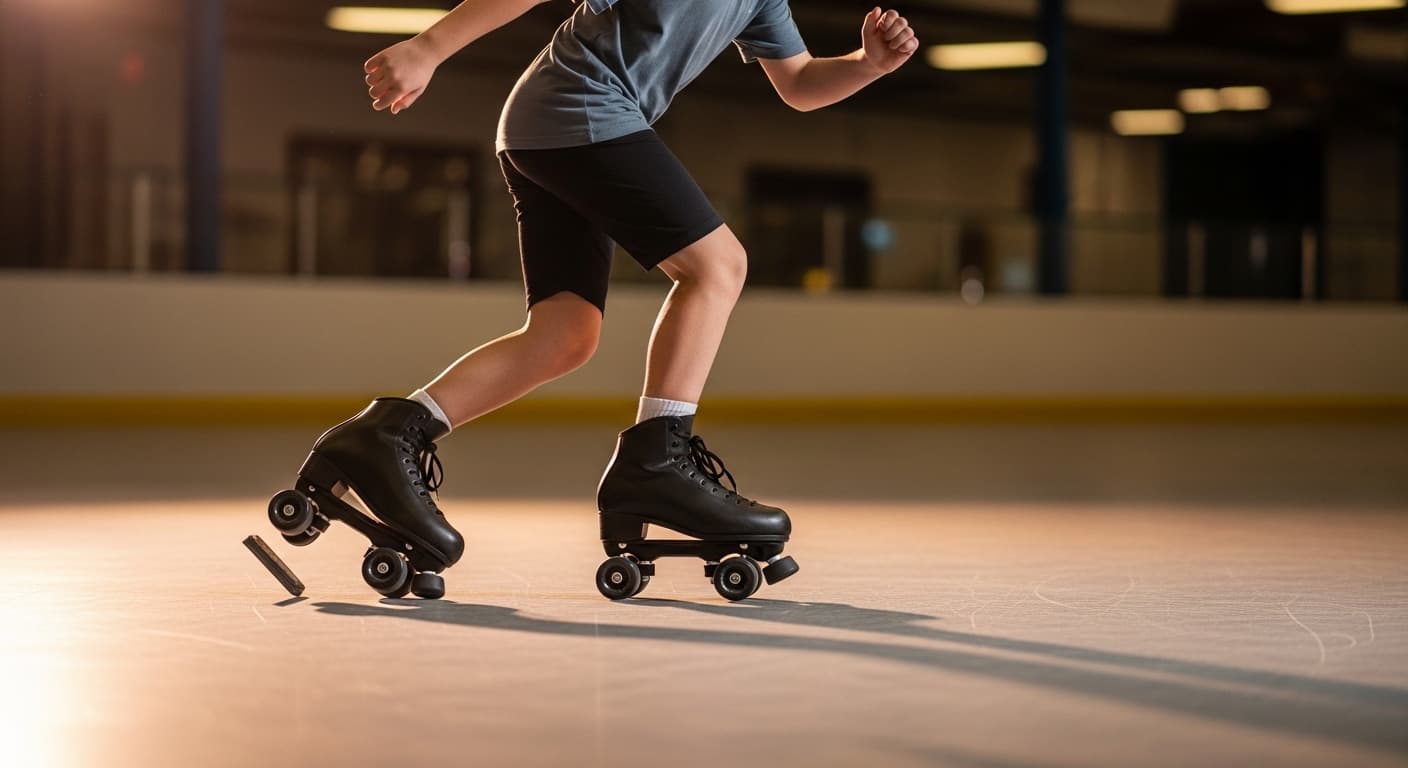
The easiest way to stop on roller skates is the toe stop drag on quads or the heel brake on inlines. Five proven methods exist, ranked by difficulty: toe stop, plow stop, T-stop, heel brake, and power slide. Most beginners learn the first method within one to two focused sessions.
Stopping is the skill new skaters worry about most, and for good reason. Rolling feels fun until the moment you pick up speed and realize you do not know how to slow down. The good news is that stopping on roller skates is not one single move. There are five proven methods, each at a different difficulty level, and most skaters learn two or three over time.
This guide walks through the five main ways to stop on roller skates, ranked from easiest to hardest. Each section gives you step by step instructions, the most common mistake, and a short safety note. For a broader primer, see our roller skating tips for beginners.
Quick answer: the easiest way to stop on roller skates
The easiest way to stop on roller skates is the toe stop drag on quads or the heel brake on inlines. Both use a built in rubber brake, keep both feet on the ground, and work at low to moderate speeds. They are the first stops most beginners learn because they ask very little of your single-leg balance.
Start with the stop your skate was built for. Quad skaters practice the toe stop drag in session one. Inline skaters practice the heel brake the same way. Once that feels solid, add the plow stop, then the T-stop, then the power slide if your style calls for it. Coaching guides and rink-instructor write-ups consistently make the same point: skaters who drill one reliable stop first tend to fall far less than the ones chasing the fancier techniques.
Method 1: How do you do a toe stop drag on quad skates?
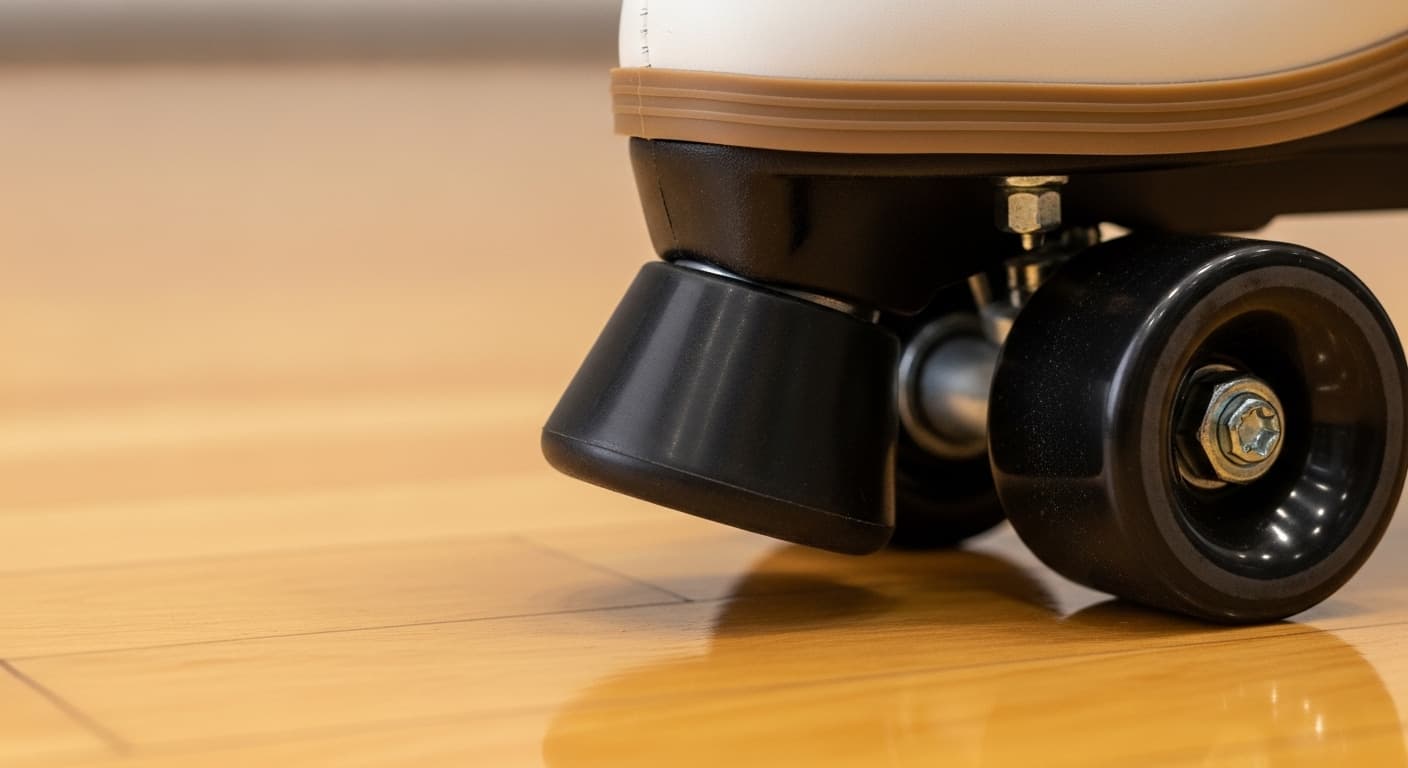
The toe stop drag is the beginner method for how to stop on roller skates with quads. You trail one foot behind, tip it onto the rubber toe stop at the front of the skate, and let friction scrub off speed. It works at low and moderate speeds and is the stop most quad skates are built around.
When to use it: Walking to jogging pace on flat ground. Your everyday quad stop.
Step by step:
- Roll forward at a slow comfortable speed with knees bent.
- Shift most of your weight onto your front skate.
- Slide your other foot behind you so the rubber toe stop touches the floor.
- Press gently down through the toe stop and let it drag.
- Stand a touch taller as you slow, then bring your feet parallel to stop.
Common mistake: Kicking the toe stop straight down like a kickstand. That tips you forward over the front wheels. Drag it along the floor instead.
Safety note: Keep your front knee bent. A locked front knee plus heavy toe stop pressure equals a face plant.
Method 2: What is a plow stop and how does it work?
The plow stop, also called a snowplow, works on both quad and inline skates. You turn both toes inward and push both heels outward so your skates form a wide V shape. The inward pressure forces the wheels to slow you through friction. It is the go-to stop when you do not have a toe stop handy.
When to use it: Downhill starts, crowded rinks, or any time you need to bleed speed with both feet on the floor. Great for inlines without heel brakes.
Step by step:
- Bend your knees deeper than normal, with your weight low.
- Push both feet wider than shoulder width.
- Rotate your toes inward so they point toward each other.
- Press your heels outward through the sides of your wheels.
- Squeeze the V shape inward to slow and stop.
Common mistake: Letting the V collapse so your toes touch. That tangles your wheels and drops you forward. Keep a fist-width gap between your toes at all times.
Safety note: The plow stop puts real stress on the knees. If you feel pain, back off and work on balance first. Our balance guide covers drills that make the plow stop safer.
Method 3: How do you perform a T-stop on roller skates?
The T-stop is an intermediate method where you drag one skate sideways behind the other to form the shape of the letter T. The back wheels scrape along the floor and scrub speed while the front foot rolls normally. Both quad and inline skaters use it. It looks smooth but wears wheels down faster and needs solid single-leg balance.
When to use it: Medium speed cruising when you want a clean controlled slow down.
Step by step:
- Roll forward at a steady moderate pace.
- Shift your weight fully onto your front skate.
- Lift your back foot slightly and rotate it ninety degrees outward.
- Set the back skate down behind the front one, perpendicular to your direction of travel.
- Press the back wheels lightly into the floor and let them drag until you stop.
Common mistake: Too much pressure on the trailing skate. You either skid sideways or trip over your own foot. Start feather light and build up.
Safety note: The T-stop wears back wheels unevenly. Rotate them every few sessions to keep them round.
Method 4: How do you use a heel brake on inline skates?
The heel brake is the beginner method built into most recreational inline skates. A rubber block on the back of one skate presses against the floor when you lift your toes. It works much like the toe stop drag on quads, just on the opposite end of the foot. Many fitness and speed inlines ship without a heel brake, so check your skates first.
When to use it: Any moderate speed stop on recreational inlines. This is the everyday inline stop.
Step by step:
- Roll forward with knees bent and hands out in front for balance.
- Slide the skate with the brake a half step ahead of the other.
- Keep the front knee bent and the back knee slightly straighter.
- Lift the toe of the braking skate so the heel brake touches the floor.
- Press down through your heel and let the brake drag until you stop.
Common mistake: Leaning backward when the brake catches. That lifts your front wheels and drops you on your tailbone. Keep your chest slightly forward of your hips.
Safety note: Heel brake pads wear down fast. Check yours before every session. A worn brake will not stop you in an emergency. Pre-skate equipment inspection is a standard practice taught by USA Roller Sports and most rink learn-to-skate programs.
Method 5: What is a power slide or hockey stop?
The power slide, sometimes called a hockey stop, is an advanced method where you swing both skates sideways at once and skid to a halt. It is fast, dramatic, and demands strong edges, confident balance, and a controlled hip rotation. Most recreational skaters never learn it, and that is fine. Save this for later, or skip it entirely.
When to use it: High speed stops where a drag would take too long. Common in aggressive and derby skating, rare in fitness or rink skating.
Step by step:
- Build moderate speed in a straight line with deep knees.
- Shift your weight low and center.
- Rotate your hips, shoulders, and both skates ninety degrees at the same time.
- Press your outside edges hard into the floor to skid.
- Stay low and keep your chest forward through the slide until you stop.
Common mistake: Leaning backward during the rotation. You lose your edges and sit down hard. Keep weight centered over the balls of your feet.
Safety note: This stop is fall-prone even for practiced skaters. Wear full pads. Learn methods one through four first. Slides are widely treated as an advanced technique across roller sports, including by the international governing body World Skate.
Which stopping method should beginners learn first?
Beginners should learn the stop built into their skate first. Quad skaters start with the toe stop drag. Inline skaters start with the heel brake. Both keep you balanced on two feet, use a purpose-built rubber brake, and work at the slow speeds where beginners actually ride. Layer on plow stops and T-stops once those basics feel automatic.
This guide suggests this learning order:
- Toe stop drag (quads) or heel brake (inlines), session one.
- Plow stop, once you can roll comfortably for ten minutes.
- T-stop, once you can balance on one foot for five seconds.
- Power slide, only if it fits your skating style.
A few habits make every stop easier. Keep knees bent, weight centered low, eyes forward, and pressure into the ground through the brake or edge. Stand up straight or look down at your feet, and almost every stop will fail. If a technique feels wrong, check your stance before blaming the method. Our beginner roller skating guide builds the fundamentals underneath every stop on this page.
Progress comes from short focused reps, not long exhausting sessions. Ten minutes of plow stops at the start of each skate builds muscle memory faster than an hour of half-hearted attempts. Gear up every time. Stay low. Trust the brake your skate gave you, and match the method to your speed.
When you are ready for the next step, take our short skate quiz to match your goals to the right skate setup, or head back to the complete roller magic guide to see where stopping fits into your skating journey. Stopping is also covered in formal skill curricula from USA Roller Sports and the World Skate artistic skating syllabus.
Frequently Asked Questions
What is the easiest way to stop on roller skates?
For quad skaters, the toe stop drag is the easiest way to stop on roller skates. You trail one foot behind, press the rubber toe stop into the floor, and let friction slow you. For inline skaters, the heel brake does the same job. Both are built into most beginner skates for this reason.
Why can I not stop on my roller skates?
Most beginners struggle because they stand up straight and lock their knees. Stopping works when your knees are bent, your weight is centered low, and one foot trails behind to press the brake or drag the toe stop. Practice at walking speed first so the movement becomes muscle memory.
How do you stop on roller skates without a toe stop?
Use a plow stop or a T-stop. The plow stop turns both toes inward and pushes the heels out to form a V shape. The T-stop drags the back foot sideways behind the front foot. Both work on quads and inlines and do not rely on a toe stop or heel brake.
How long does it take to learn to stop on roller skates?
Most new skaters pick up a toe stop drag or heel brake stop in one or two focused sessions. A reliable plow stop takes two to four sessions. The T-stop usually takes a week or two of regular practice. Power slides and hockey stops are advanced and can take months to feel smooth.
Should beginners learn the T-stop or the plow stop first?
Plow stop first. It keeps both feet on the ground, which feels stable while you are still learning balance. The T-stop asks you to balance on one foot while dragging the other, so it works better once your single-leg control is solid. Most coaches teach plow before T.
Frequently asked questions
Related reads
Roller skating tips for beginners that actually work. 20 practical tips on gear, stance, movement, and the mistakes to avoid on your first sessions.
14 min read
How to balance on roller skates: the exact stance, weight-shift drill, single-leg hold, and 3 proven home exercises beginners can use to stop wobbling.
11 min read
Learn how to roller skate for beginners with a step by step guide: gear, stance, first strides, stopping, falling safely, and a 4 week practice plan.
19 min read
Your full roller magic guide to roller skating: beginner basics, skate buying tips, indoor vs outdoor, fitness benefits, parties, safety gear, and more.
17 min read