skills
Roller Magic Tricks: 7 Moves Beginners Learn First
Learn 7 beginner Roller Magic tricks in order. Safe progression, step by step drills, and real timing tips so your first roller skate moves stick.

The first 7 beginner roller skate tricks to learn in order are the duck walk, the swizzle, the one foot glide, the backward swizzle, the stride turn, the crossover, and the mohawk turn. This Roller Magic ladder takes most adult beginners about 4 weeks of short practice sessions and builds the balance foundation every harder trick depends on.
Why learn roller skate tricks in this order
These seven Roller Magic tricks are sequenced to build on each other. Each move trains a specific skill that makes the next move possible. Skipping ahead is the fastest way to lock in a bad habit that takes months to unlearn. Follow the order below even if the first drills feel simple.
Before you start, make sure you can roll forward 30 feet, stop with a toe stop or heel brake, and stand still on your skates without grabbing a wall. If any of that feels shaky, work through our balance drills first. Trying new roller skate tricks before balance is solid leads to injuries that set you back weeks.
Safety gear before every session: helmet, wrist guards, and knee pads. The Roller Magic training sessions in this guide assume all three are on.
Trick 1: The duck walk
The duck walk is how you start every Roller Magic skill ladder. Point your toes slightly outward, keep your knees soft, and take short steps forward. Each step plants the wheel, then lifts and places the next foot. You are not rolling yet. You are teaching your feet the skate stance.
Drill: 20 duck walk steps, then pause, then 20 more. Do this until the stance feels automatic.
Common mistake: locking the knees. Stiff knees shift your weight to your heels and send you backward. Keep a slight bend at all times.
Trick 2: The swizzle
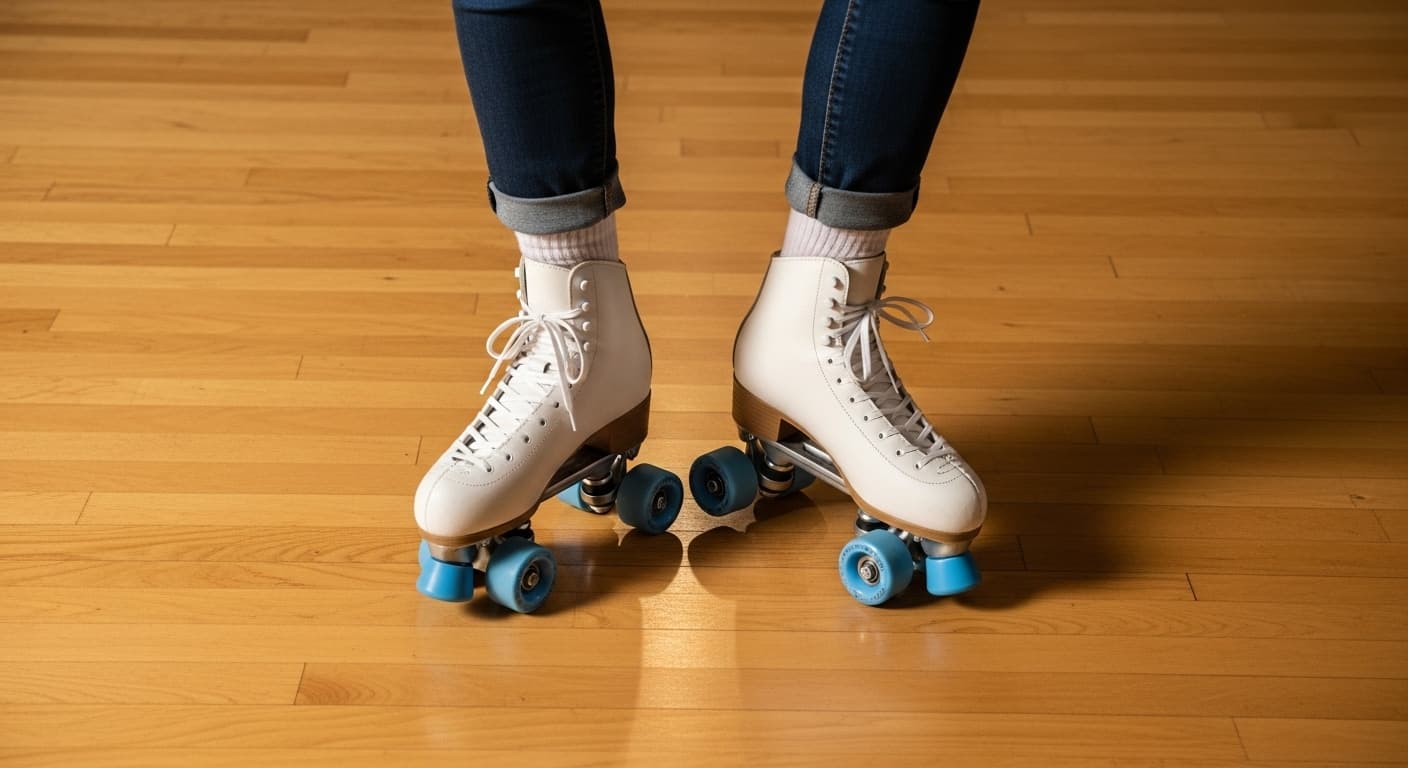
The swizzle is the first true rolling move on your Roller Magic learning path. Start with feet together, toes pointing slightly out. Push both feet outward in a small arc, then pull them back together using the inside edge of each wheel. Your feet trace two curves shaped like a pumpkin seed.
Drill: 10 swizzles in a row, relax, repeat 3 times.
Why this trick matters: swizzles train both edges of your wheels, which is the foundation for every roller skate trick that involves turning.
Trick 3: The one foot glide
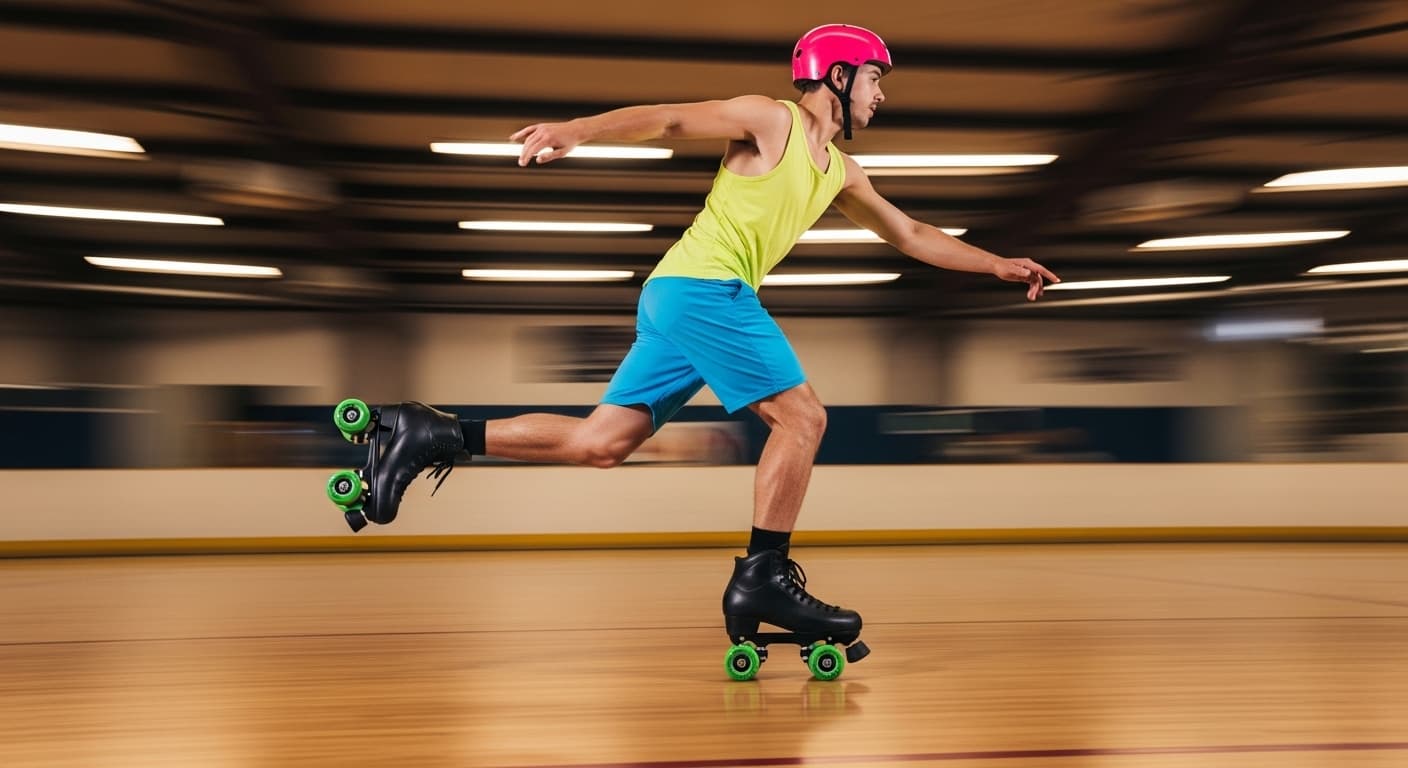
Once you can swizzle for ten feet without wobbling, try the one foot glide. Roll forward at a comfortable speed, bend both knees, shift weight onto your stronger leg, and gently lift the other foot two inches off the ground. Hold for one second. Put it back down.
Build up: one second, then two seconds, then three. Most beginners reach a five second glide within two weeks.
This Roller Magic move is the gate to every harder trick. Crossovers, turns, transitions, and spins all start with a balanced one foot edge.
Trick 4: The backward swizzle
Once forward swizzles feel easy, flip them. Start with feet together, toes pointing slightly inward. Push your heels outward in a small arc, then pull them back together. Your feet trace the same pumpkin seed shape, backward.
Drill: 10 backward swizzles, rest, then 10 more. Use a wall for balance on the first few.
Backward motion feels wrong at first. That is normal. Your brain is building a new map. Most beginners take 3 to 5 sessions before the backward swizzle stops feeling awkward.
Trick 5: The stride turn
The stride turn is your first real roller skate trick that changes your direction. Roll forward. Lift your inside foot, pivot on the outside foot, and set the lifted foot down pointing in the new direction. The skate redirects from the hip, not the shoulders.
Drill: 5 stride turns left, 5 stride turns right. Alternate corners of a parking lot or rink.
Pro tip from the Roller Magic coaching desk: look where you want to go a full second before your feet move. The eyes lead the turn. Skaters who stare at their feet fall.
Trick 6: The crossover
The crossover is the move that makes skating look graceful in videos. Roll forward in a gentle arc. As you reach the inside of the arc, lift the outside foot and place it across the inside foot. The outside foot is now on the ground and the inside foot is the one that moves next.
Drill: 3 slow crossovers on a large circle, both directions, across 5 sessions.
Common mistake: rushing. Beginners try to cross quickly and catch a wheel on their other skate. Slow crossovers on a wide circle are safer and build the muscle memory faster.
Trick 7: The mohawk turn
The mohawk turn is where the Roller Magic trick ladder starts getting advanced. Roll forward on one foot. Bring the other foot up so it points backward next to your standing foot. Step down on it. Now you are rolling backward.
Drill: practice the foot placement standing still first. When the placement feels natural, try it at walking speed, then slow rolling speed.
This move takes most beginners a full month to land cleanly. Keep knees soft, shoulders level, and eyes forward. If you feel your weight shift to your heels, bring it back to the middle of the foot before stepping down.
A Roller Magic week of practice
A realistic 7 day practice plan to cycle through all seven roller skate tricks:
- Day 1: Duck walks, swizzles, 20 minutes.
- Day 2: Rest or stretch.
- Day 3: Swizzles, one foot glides, 20 minutes.
- Day 4: Rest.
- Day 5: Backward swizzles, stride turns, 25 minutes.
- Day 6: Rest or light free skate.
- Day 7: Crossovers and mohawk foot placement standing still, 20 minutes.
Rotate this week for a month. Most beginners land all seven roller skate tricks cleanly by week 4. If a move still feels wrong at week 4, back up one trick and spend another session there.
Stopping matters more than tricks
Every Roller Magic coaching notebook says the same thing: a skater who can stop confidently learns tricks twice as fast. If you cannot stop on demand at your current rolling speed, pause the trick ladder and spend a session on stopping. Our how to stop on roller skates guide walks through five methods including the T stop and the plow stop.
What comes after these tricks
Once the seven Roller Magic beginner tricks feel automatic, you have the foundation for every intermediate move: backward crossovers, three turns, one foot spins, toe stop runs, and jam skating basics. Keep your practice short and frequent. Twenty minutes four times a week beats one long three hour session on Sunday, because your nervous system learns balance during rest.
For a longer beginner roadmap, read our roller skating tips for beginners or the full Roller Magic complete guide. If you want to progress toward competitive skating, both World Skate and USA Roller Sports publish discipline rules and skill grading for artistic and speed skating.
Frequently asked questions
Related reads
How to balance on roller skates: the exact stance, weight-shift drill, single-leg hold, and 3 proven home exercises beginners can use to stop wobbling.
11 min read
Learn how to stop on roller skates with 5 methods ranked by difficulty: toe stop, plow, T-stop, heel brake, and power slide, for quads and inlines.
13 min read
Roller skating tips for beginners that actually work. 20 practical tips on gear, stance, movement, and the mistakes to avoid on your first sessions.
14 min read
Your full roller magic guide to roller skating: beginner basics, skate buying tips, indoor vs outdoor, fitness benefits, parties, safety gear, and more.
17 min read