gear
Roller Skates vs Rollerblades: A Roller Magic Comparison
Roller skates vs rollerblades explained by Roller Magic. Side by side on speed, stability, learning curve, outdoor use, and which to buy first in 2026.
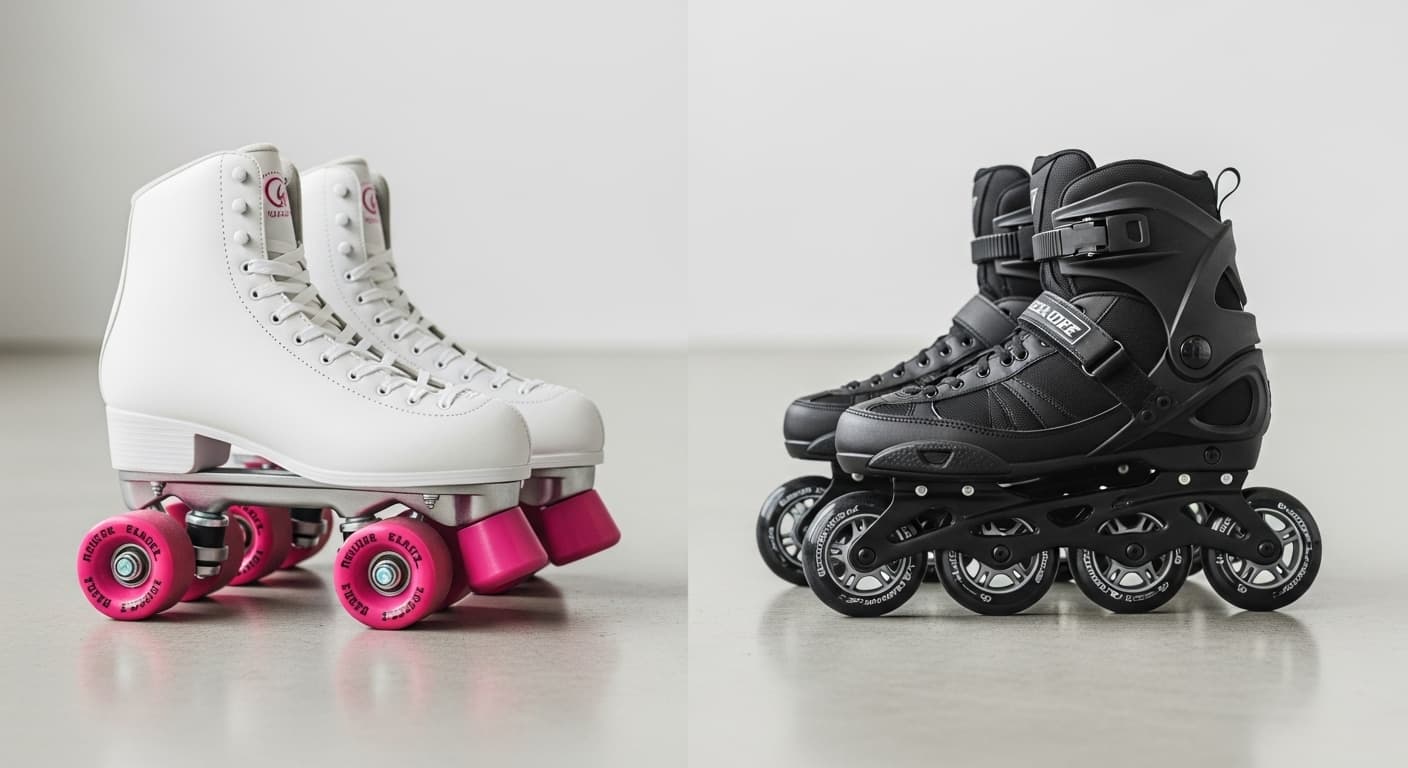
Roller skates have 4 wheels in a rectangle and are easier for absolute beginners, better at rinks, and best for dance or derby. Rollerblades have 3 to 5 wheels in a line and roll faster on long smooth paths. The Roller Magic pick for first time skaters is quad roller skates because the wide wheel base is more stable for learning.
The quick Roller Magic answer
Pick roller skates if you want easier learning, indoor rink nights, and a stable side to side platform. Pick rollerblades if you want faster long distance cruising, smoother rolling on rough pavement, and a stride that feels familiar to ice skaters. This Roller Magic comparison walks through every meaningful difference so you can match the skate to the way you plan to roll.
The core difference
Roller skates, also called quad skates, use four wheels in a rectangle under each boot, two front and two back. Rollerblades, also called inline skates, use three to five wheels lined up in a single row under each boot. That single shape change controls almost everything else about how each skate feels.
The Roller Magic short version:
- Roller skates: stable side to side, quick to pivot, slower top speed, toe stop in front.
- Rollerblades: stable front to back, faster on smooth ground, longer glide per push, heel brake in back.
Balance and stability
Stand still on roller skates and you have four wheels spread out like a table. The platform resists side to side wobble, which is why Roller Magic coaches recommend quads for absolute beginners. Most new skaters feel comfortable in the quad stance within the first hour.
Stand still on rollerblades and the wheels are in one straight line under each foot. The skate wants to roll forward or backward. Holding still requires active ankle control. That same design is what makes rollerblades faster at full stride, but harder at low speed.
For the first session, a beginner on roller skates falls less often than a beginner on rollerblades. Across a full month of practice that gap closes, but the starting experience matters for whether a new skater sticks with the sport.
Speed and glide
Rollerblades win on flat distance. The three or four wheels in a line mean a longer contact patch during each push, which gives a longer glide before the next push is needed. Rollerblade racers often reach 15 to 20 mph sustained on open paths.
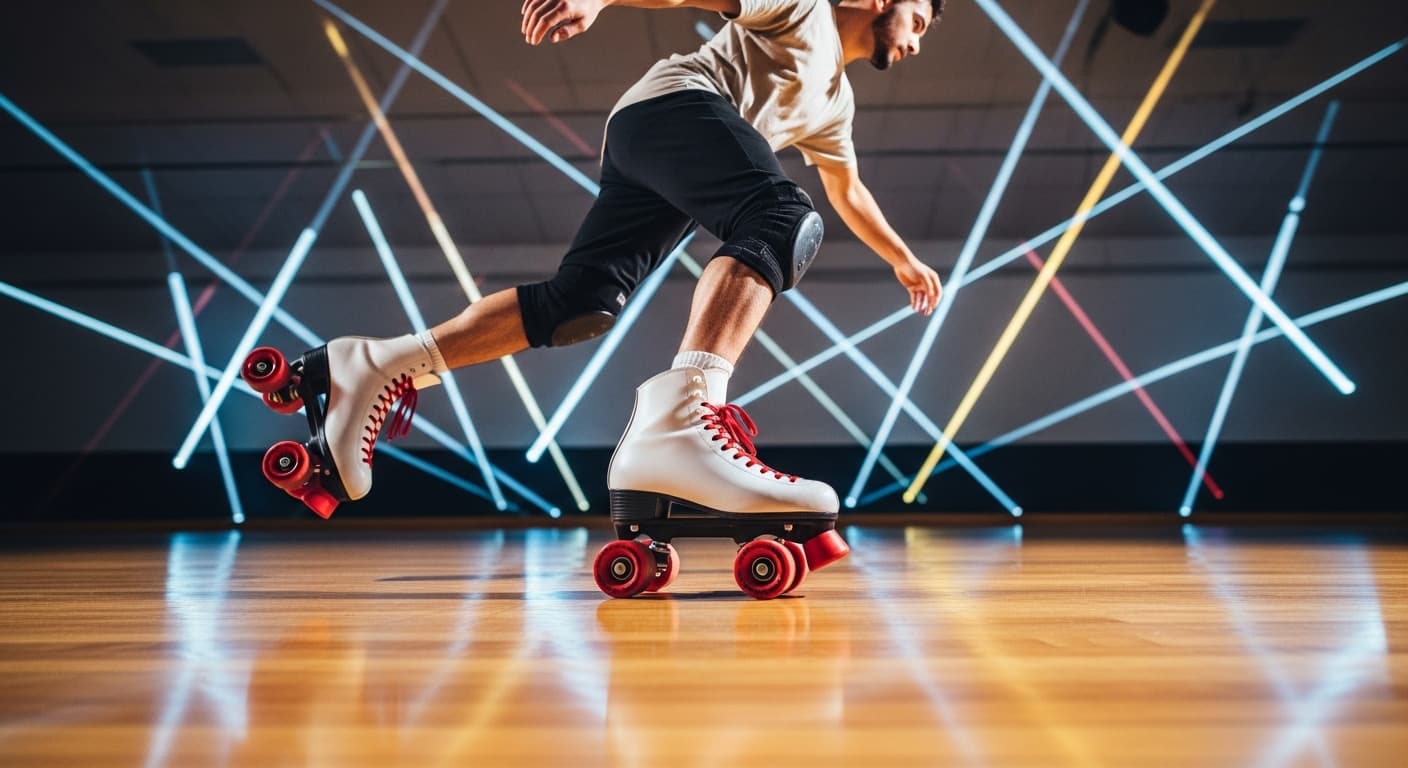
Roller skates feel quicker at short bursts and direction changes. A quad skate pivots on its front or back truck, letting you snap a turn in a few feet. That is why roller skates rule rink dance and roller derby, where tight corners and quick lateral shifts matter more than top speed.
Roller Magic rule: pick rollerblades for the boardwalk, pick roller skates for the rink.
Stopping
Roller skates stop with a toe stop, a rubber plug at the front of the skate. You drag it behind you to slow down, or you tip forward onto it to stop quickly. The toe stop takes about one session to learn.
Rollerblades stop with a heel brake, a rubber pad mounted behind the last wheel on one skate. You extend the braking foot forward, tip your toe up, and push the heel pad into the ground. The heel brake also takes about one session to learn, but it scares beginners because lifting the toe feels unstable.
Neither stop is dramatically better. Both take practice. See our how to stop on roller skates guide for toe stop drills that carry over to most quad setups.
Indoor rink performance
Roller skates dominate indoor rinks. The quad platform pivots perfectly for dance steps, crossovers, and the classic roller rink shuffle. Indoor rink wheels on quad skates are designed to grip polished maple wood or coated concrete.
Rollerblades work indoors but feel slow and sticky at dance speeds. The long wheel base struggles with tight circles. Most rink nights you will see 80 percent quads and 20 percent rollerblades.
If most of your skating will happen at a local rink, the Roller Magic recommendation is clear: start with quad skates.
Outdoor performance
Outdoor roller skating depends on wheel hardness more than skate type. Soft 78A to 82A wheels grip pavement and cushion cracks. Hard rink wheels slide dangerously on rough ground.
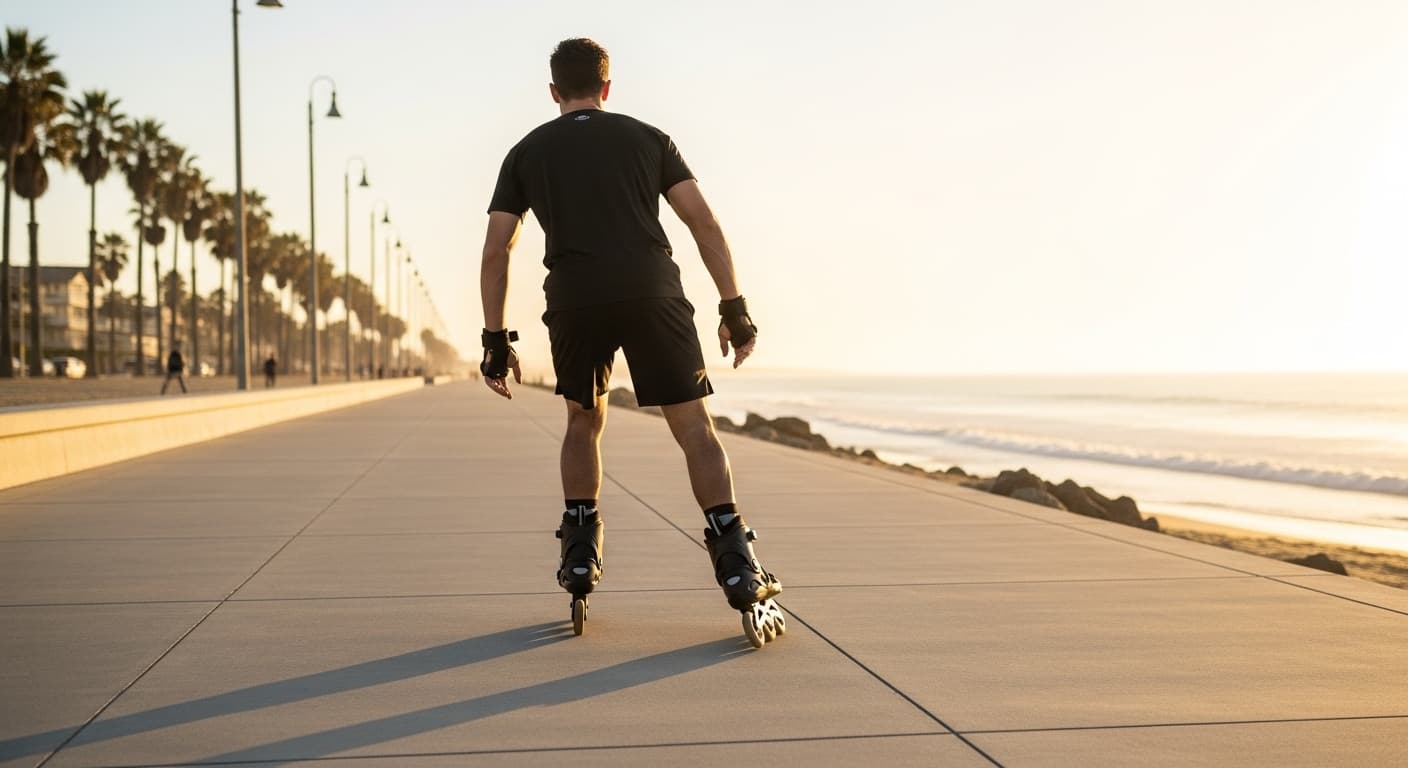
Rollerblades with large 80mm outdoor wheels handle sidewalks very well because the big diameter rolls over small cracks. Roller skates with 65mm outdoor wheels handle smooth paths fine but get bounced around on rougher pavement.
For mixed outdoor terrain, either skate works if you pick outdoor wheels. For long smooth bike paths and multi mile cruising, rollerblades are the Roller Magic pick. For short outdoor sessions on smooth concrete, quads are just as comfortable.
 Read our indoor vs outdoor roller skating breakdown for wheel specifics.
Learning curve
Most adult beginners follow this pattern:
- Week 1 on roller skates: stand up, roll 30 feet, do a swizzle, stop with toe stop.
- Week 1 on rollerblades: stand up, roll 30 feet, use the heel brake slowly.
- Week 4 on roller skates: crossovers, one foot glides, backward swizzles.
- Week 4 on rollerblades: longer strides, tighter turns, confident heel braking.
Neither skate is dramatically harder. The biggest Roller Magic predictor of how fast you learn is how many sessions you put in, not which skate you bought. Four 20 minute sessions a week beat one 90 minute session on Saturday.
Tricks and styles
Different skate styles point to different disciplines:
- Quad roller skates: rink dance, derby, jam skating, artistic, park skating on smaller wheels.
- Rollerblades: aggressive street skating, freestyle slalom, speed skating, hockey, urban commuting.
Both can do most tricks, but each skate has moves that come naturally to it. Rollerblade grinds on handrails are easier than quad grinds because the inline shape sits lower and slides cleaner. Quad dance spins are easier than inline spins because the square platform holds balance during rotation.
Cost comparison
Budget wise, the two styles are similar at the beginner tier.
- Beginner quad roller skates: 80 to 200 dollars for a trusted brand.
- Beginner rollerblades: 100 to 220 dollars for a trusted brand.
Upper tier skates cost 400 to 900 dollars in either category. Roller Magic readers should focus on fit and brand reputation before price. A well fitting 100 dollar skate teaches you faster than a poorly fitting 300 dollar skate.
For specific quad recommendations by budget, see the best roller skates for beginners list.
The Roller Magic final pick
If you are choosing your first skate and none of the above pushed you clearly one way:
- Buy quad roller skates if you plan to skate at rinks, want the easier first session, like the look of retro skating, or want the option to try derby later.
- Buy rollerblades if you want long distance cruising on smooth paths, came from ice skating, or want to hit higher sustained speeds.
Both skates are fun. Both skates build real fitness. Both belong in your life. The Roller Magic complete guide covers everything else you need to start. Read it at the Roller Magic complete guide. Brand sites worth browsing next: Moxi Skates for quad options, Rollerblade for inline options, and World Skate for the governing body behind both disciplines.
Frequently asked questions
Related reads
The best roller skates for beginners in 2026: fit, wheels, quad vs inline, budget tiers, 7 top models, and buying mistakes to avoid.
18 min read
Indoor vs outdoor roller skating compared: surfaces, 78A to 97A wheels, safety, gear, and which one suits beginners and fitness skaters best.
18 min read
Your full roller magic guide to roller skating: beginner basics, skate buying tips, indoor vs outdoor, fitness benefits, parties, safety gear, and more.
17 min read